Best Heat-Tolerant Pool Plants: Buffalo NY Guide
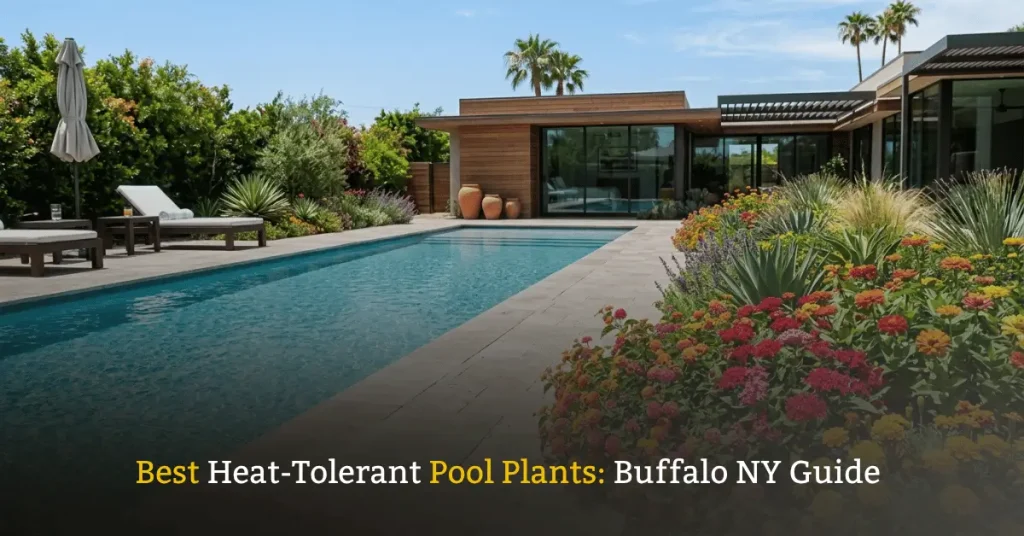
You spent good money on your pool. The deck looks great. But the plants around it? They are either dead, dropping leaves into the water, or making your pool look like a jungle.
Most homeowners in Buffalo pick the wrong plants. Not because they are careless. Because the advice they find online was written for Florida or California, not Western New York.
Pool areas in Buffalo are brutal on plants. You get reflected heat bouncing off concrete in July. You get chlorine splash killing roots. Then November hits and whatever survived the summer has to handle a Zone 6a freeze.
This guide fixes that.
We cover the best heat-tolerant plants specifically for Buffalo pool areas. You will learn which plants thrive in full sun and reflected heat, which ones drop zero debris into your water, and which ones come back every year without replanting.
We also cover what to avoid. Some of the most popular landscaping plants will clog your filter, crack your pool liner, or turn your pool into a bee convention.
If you want a pool area that looks like a resort and works in the 716, keep reading.
Why Pool Area Planting in Buffalo Is Different
Planting near a pool is not regular gardening. The environment around a pool creates conditions most plants cannot handle. Buffalo makes it even harder.
Your pool area sits in a microclimate. The concrete and pavers absorb heat all day and radiate it back at night. Temperatures near the pool deck can run 10 to 15 degrees hotter than the rest of your yard. Add Buffalo’s humid summers and you have an extreme growing environment.
Then winter arrives. Whatever you plant needs to survive Zone 6a lows of minus 10 degrees Fahrenheit. Most plants marketed as heat tolerant are rated for Zone 9 or 10. They will not make it through a single Buffalo winter.
This is why generic plant lists fail Buffalo homeowners. You need plants that handle both extremes. Scorching reflected heat in August and brutal freeze thaw cycles from November through March.
The good news is those plants exist. You just need to know which ones to pick.
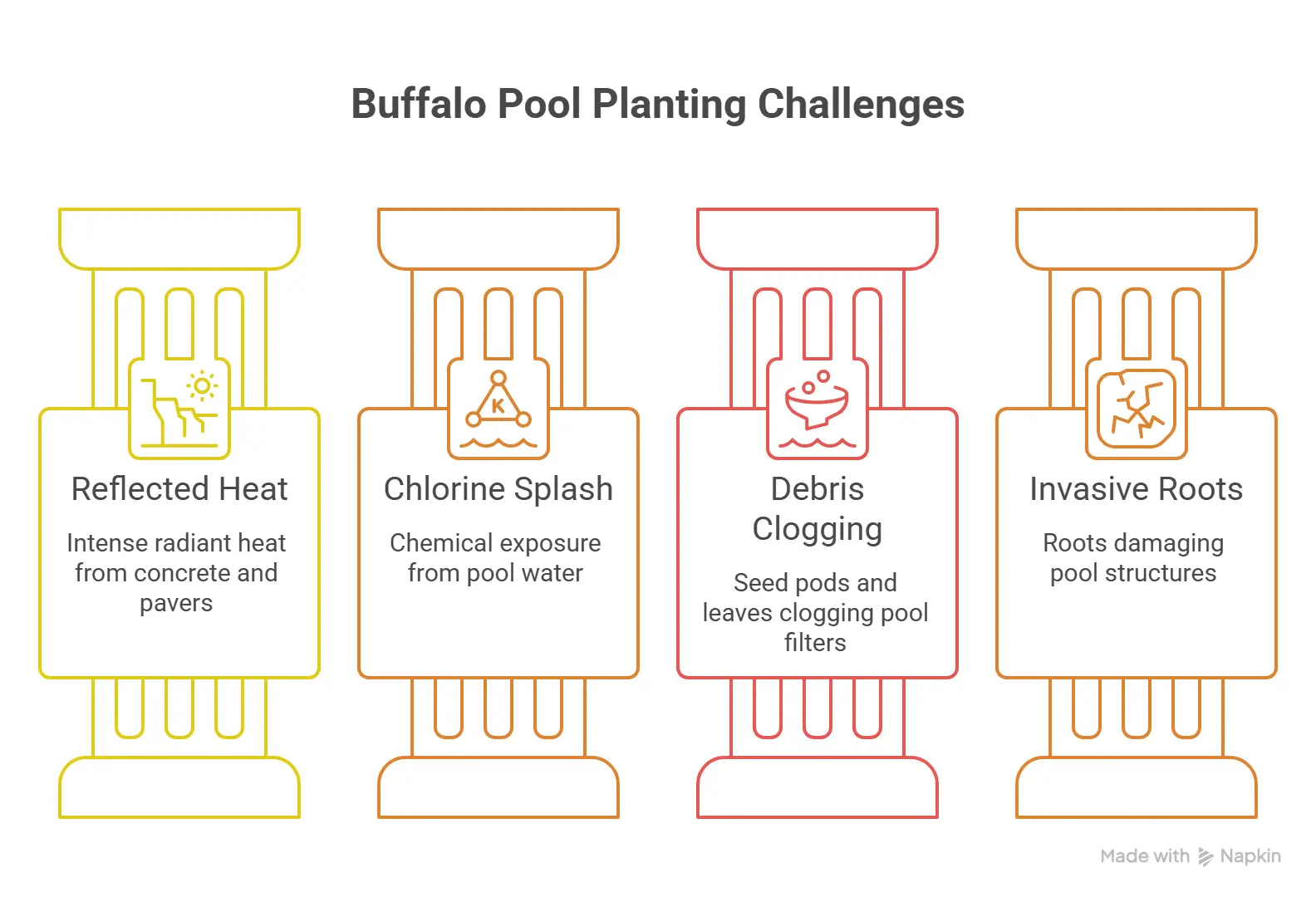
The Four Unique Challenges of a Buffalo Pool Environment
Reflected Heat Concrete and pavers around your pool act like a heat amplifier. Plants sitting close to the deck face intense radiant heat from below and direct sun from above. Only plants with waxy coatings, deep roots, or drought adapted leaves survive this.
Chlorine and Salt Splash Every time someone cannonballs into your pool, chlorinated water hits your plants. Over a season, that chemical exposure builds up in the soil. Sensitive plants yellow, drop leaves, and die. You need plants with proven salt and chemical tolerance.
Debris and Pool Filter Clogging This is the most overlooked factor. A beautiful tree that drops seed pods, needles, or small flowers will drive you insane. You will spend more time skimming than swimming. Debris clogs filters and costs money in maintenance. Low litter plants are non-negotiable near a pool.
Invasive Root Systems Tree and shrub roots follow water. Your pool is a giant water source sitting underground. Aggressive root systems crack pool liners, damage plumbing, and destroy pool walls. Some trees cause thousands of dollars in structural damage. Planting distance and root behavior matter as much as appearance.
What Makes a Plant Truly Pool Friendly in Zone 6b
A pool friendly plant checks all four boxes.
- It handles reflected heat.
- It tolerates chemical splash.
- It produces minimal debris.
- And its roots stay compact and non-invasive.
In Zone 6b, add one more requirement.
- The plant must survive a Buffalo winter.
That eliminates most tropical showstoppers immediately.
The sweet spot is plants rated for Zones 4 through 9. They handle summer heat and winter cold. Native perennials like Coneflower and Black Eyed Susan hit this mark naturally. So do ornamental grasses, sedum, and certain shrubs like hardy hibiscus.
According to the USDA Plant Hardiness Zone Map, Buffalo falls in Zone 6a to 6b. Any plant you choose must be rated for at least Zone 6 to survive long term. [Source: USDA Agricultural Research Service, planthardiness.ars.usda.gov]
The 3 Zones of Your Pool Landscape
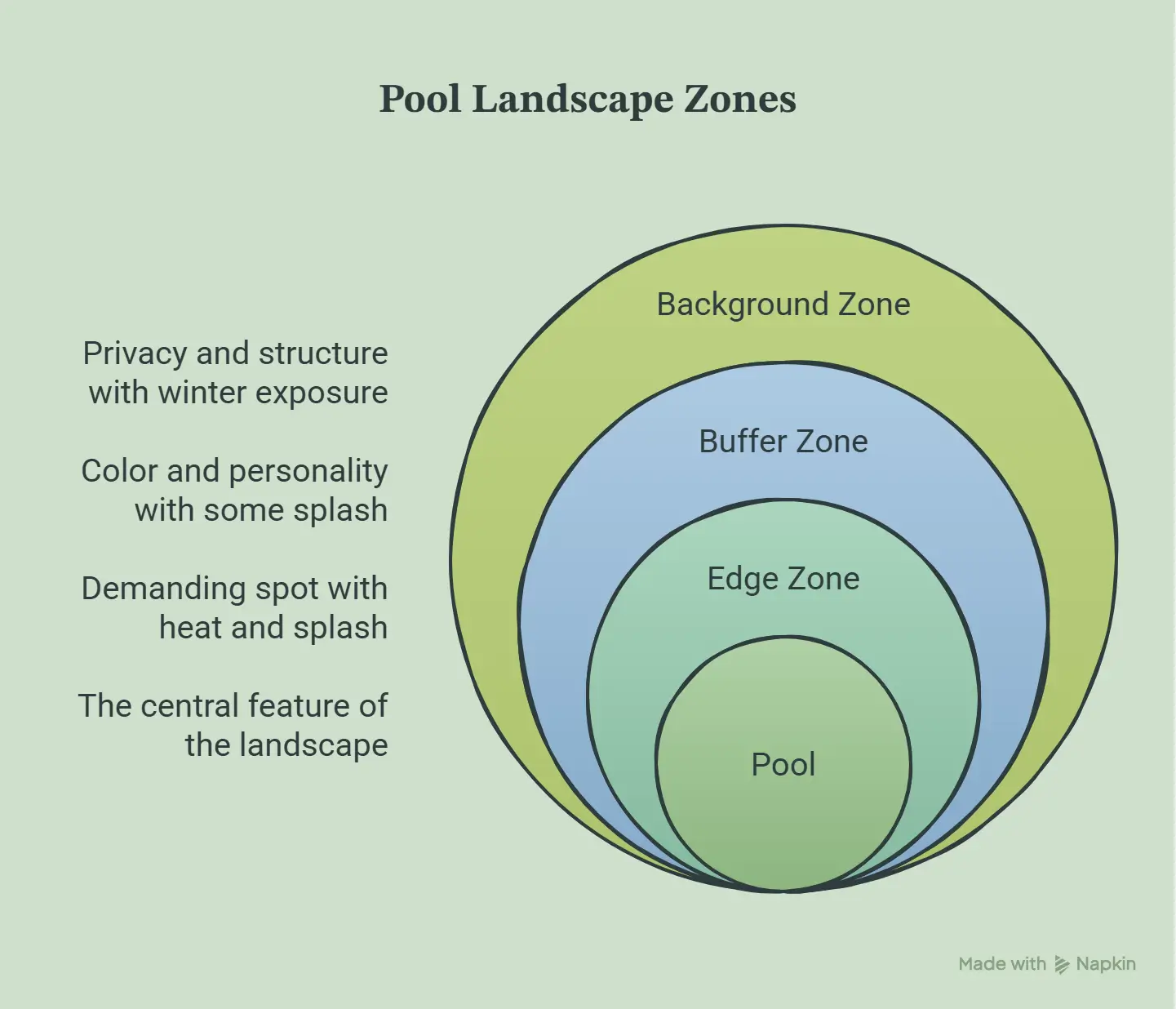
Most homeowners plant randomly around the pool and wonder why it looks messy. Professional landscapers think in zones.
Your pool landscape has three distinct zones. Each zone has different heat levels, splash exposure, and space requirements. Matching the right plant to the right zone is what separates a great looking pool area from a frustrating one.
Think of it like arranging furniture in a room. You do not put a couch in a doorway. The same logic applies to plants around water. Zone placement determines whether your pool area looks intentional or accidental.
For Buffalo homeowners, this framework also helps with winter protection. Plants closer to the pool deck benefit from slightly warmer microclimate temperatures near the water. Plants in the background zone face full Buffalo winter exposure.
Zone 1: The Edge Zone (0 to 3 Feet From Water)
This is the most demanding spot in your entire yard. Plants here face maximum reflected heat, regular chlorine splash, and foot traffic from swimmers walking in and out.
Only low growing, tough, compact plants belong here. Nothing with thorns or sharp edges. Nothing that drops debris. Nothing with aggressive roots near your pool structure.
Best choices for Zone 1 in Buffalo:
- Sedum (Stonecrop): Succulent groundcover, handles reflected heat, zero litter, comes back every year in Zone 4 through 9
- Creeping Thyme: Fragrant, low, handles foot traffic, drought tolerant, thrives in Zone 4 through 8
- Blue Fescue Grass: Compact mounding grass, drought tolerant, stays tidy all season
- Portulaca (Moss Rose): Succulent annual, loves full sun and heat, produces zero mess
Keep Zone 1 clean, low, and simple. The pool is the star. These plants frame it without competing with it.
Zone 2: The Buffer Zone (3 to 8 Feet)
Zone 2 gives you room to add color and personality. Plants here still get intense sun and some chemical splash, but they have more soil depth and less direct foot traffic.
This is where your annuals and mid-height perennials shine. Buffalo homeowners get the most visual bang for their buck in Zone 2. A well planted buffer zone makes your pool look like it belongs in a magazine.
Best choices for Zone 2 in Buffalo:
- Lantana: Nonstop blooms, laughs at heat, drought tolerant, zero debris, brings butterflies and hummingbirds
- Salvia: Tall flower spikes, deer resistant, reblooms all season, rated Zone 4 through 9
- Pentas: Handles humidity and heat, nonstop color, attracts hummingbirds
- Zinnia: Reliable summer color from June to frost, handles Buffalo heat waves easily
- Coneflower (Echinacea): Native to North America, deep roots, blooms July through September, rated Zone 3 through 9
- Black Eyed Susan: Zero maintenance once established, native wildflower, handles Buffalo clay
Mix annuals for constant color and perennials for structure that returns every year. That combination keeps your Zone 2 looking full from Memorial Day through October.
Zone 3: The Background Zone (8 Plus Feet)
Zone 3 is your privacy and structure layer. This is where you put height. Shrubs, ornamental grasses, and small trees belong here. They create the backdrop that makes everything else look designed.
In Buffalo, Zone 3 plants face full winter exposure. Choose shrubs and grasses rated for Zone 5 or lower. Anything less will struggle after a hard winter.
Best choices for Zone 3 in Buffalo:
- Karl Foerster Grass: Tall, upright, feathery plumes, zero litter, handles Zone 4 winters easily
- Hardy Hibiscus: Massive tropical looking blooms, rated Zone 4 through 9, dies back in winter and returns strong
- Crape Myrtle: Summer blooms, multi season interest, rated Zone 6 through 10, plant dwarf varieties for Buffalo
- Butterfly Bush: Full sun shrub, drought tolerant, attracts pollinators, rated Zone 5 through 9
- Panicle Hydrangea: Blooms on new wood, survives Buffalo winters reliably, adds white to cream color in late summer
Zone 3 also gives you the option to add privacy screening. Buffalo summers are short. You want to enjoy your pool without the whole neighborhood watching. Dense ornamental grasses and compact shrubs solve that problem without creating a debris nightmare.
If you want help designing all three zones professionally, our Buffalo landscape design team builds pool areas that look intentional from every angle.
Best Annual Plants for Buffalo Pool Areas
Annuals are your secret weapon. They bloom from planting until frost with almost no downtime. For Buffalo pool areas, the right annuals give you nonstop color through the entire swim season.
The key is picking annuals that thrive in heat and humidity, not just warm weather. Buffalo summers hit fast and hard. Temperatures spike into the 90s with high humidity in July and August. Weak annuals melt. Heat loving annuals explode with color.
Every plant in this section handles full sun, reflected pool heat, and Buffalo’s humid summers. None of them drop significant debris into your water.
Lantana
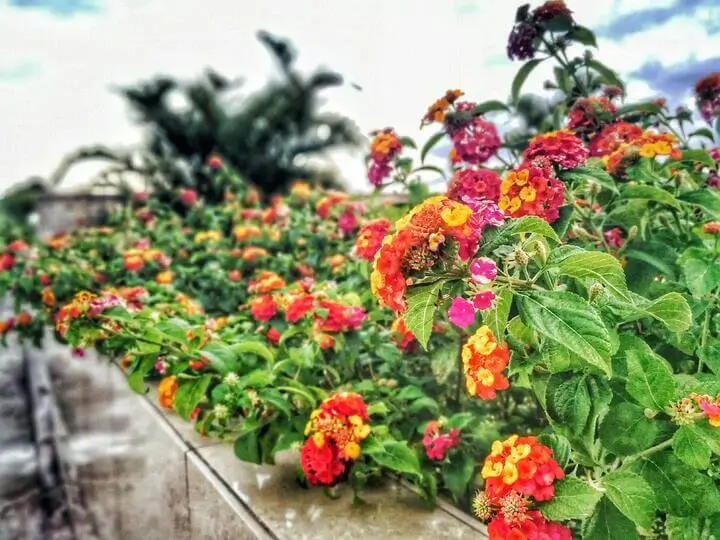
Lantana is the single best annual for a Buffalo pool area. Full stop.
It handles reflected heat that would kill most plants. It blooms continuously from June through frost without deadheading. It repels deer and attracts butterflies and hummingbirds. It produces almost zero debris near your pool.
Plant it in Zone 2 of your pool landscape. Give it full sun and well drained soil. Water it until established, then leave it alone. Lantana actually blooms better when you stress it slightly. Less water means more flowers.
One important note for Buffalo families. Lantana berries are toxic to dogs, cats, and children. Plant it where pets and small kids cannot reach the berries. [Source: American Society for the Prevention of Cruelty to Animals, aspca.org]
Lantana camara grows 2 to 4 feet tall and wide. It works as a standalone specimen or in mass plantings for dramatic color impact.
Pentas
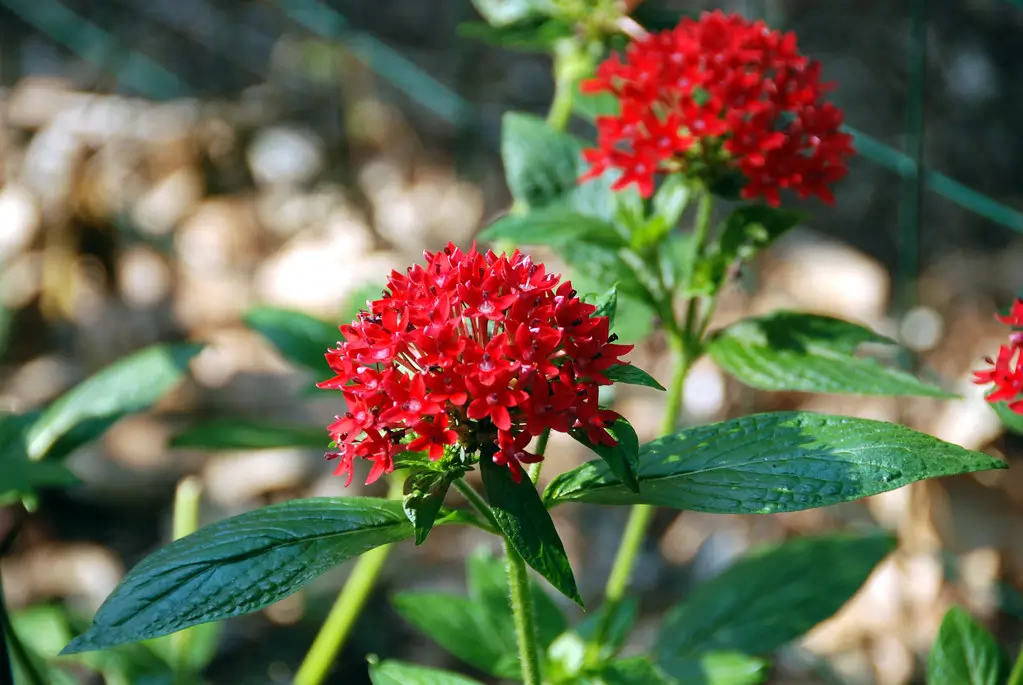
Pentas lanceolata, the Egyptian star flower, is built for heat and humidity. It does not slow down when Buffalo hits 90 degrees. It speeds up.
Pentas produces tight clusters of star shaped flowers in red, pink, white, and lavender. Hummingbirds find it immediately. So do butterflies. It blooms nonstop from planting through the first hard frost.
It works in Zone 2 borders and in large containers on your pool deck. Container grown Pentas dries out faster than in ground plants. Water container Pentas every one to two days during peak summer heat.
Pentas grows 12 to 24 inches tall depending on variety. Compact varieties like ‘Graffiti’ work well at pool edges without overwhelming the space.
Zinnia
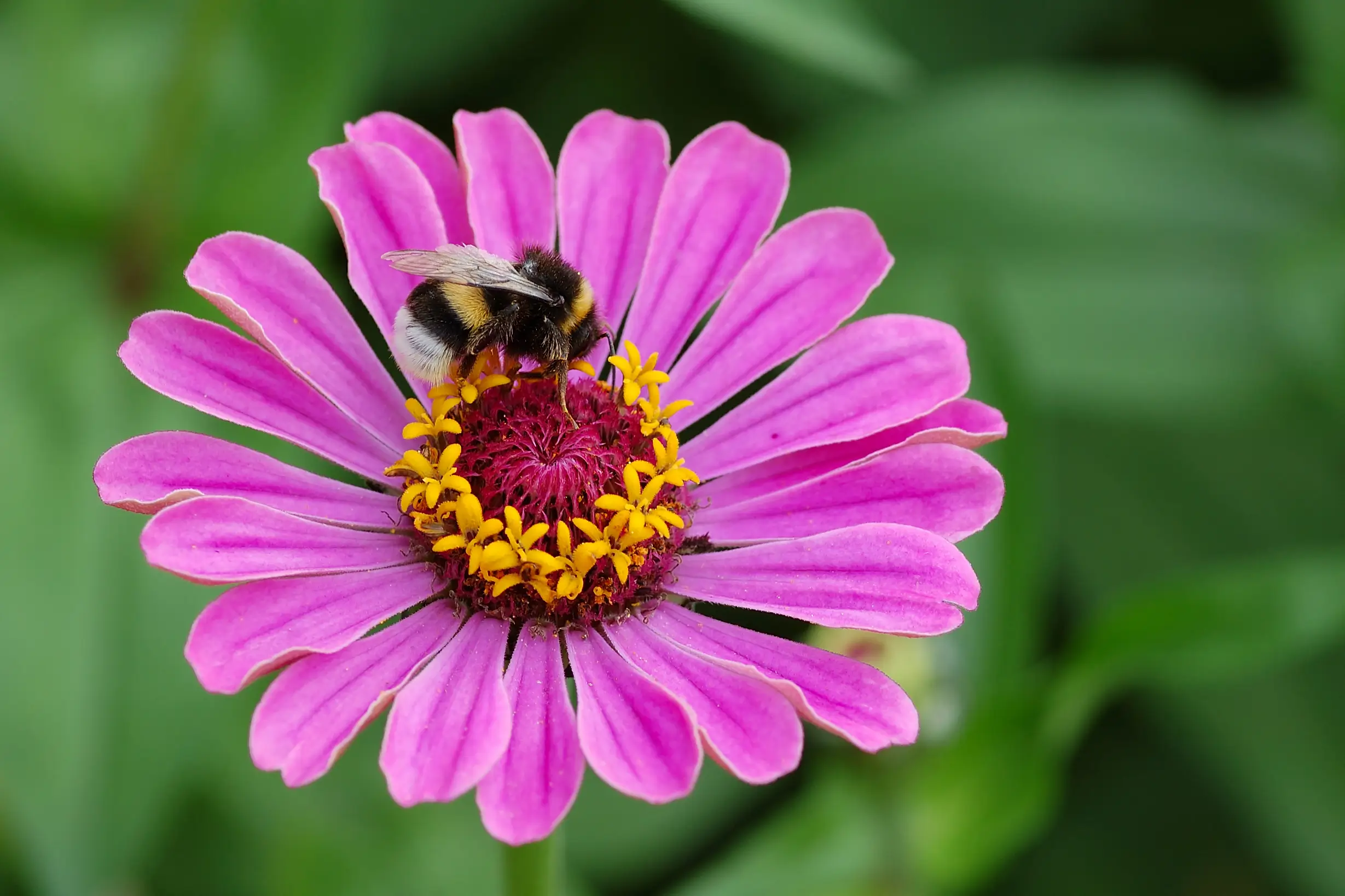
Zinnias are workhorses. They bloom fast, bloom heavy, and handle Buffalo heat without complaint.
Plant them after Memorial Day when soil temperatures warm up. They establish quickly and start blooming within six to eight weeks of planting. Zinnias come in every color imaginable. Mix heights and colors for a wild, cottage style border in Zone 2.
One practical note. Zinnias can get powdery mildew in humid conditions. Plant them with good air circulation and avoid overhead watering. Water at the base and water in the morning.
Zinnias grow 12 to 36 inches tall depending on variety. Tall varieties like ‘Benary’s Giant’ make a strong visual statement in the buffer zone.
Marigold
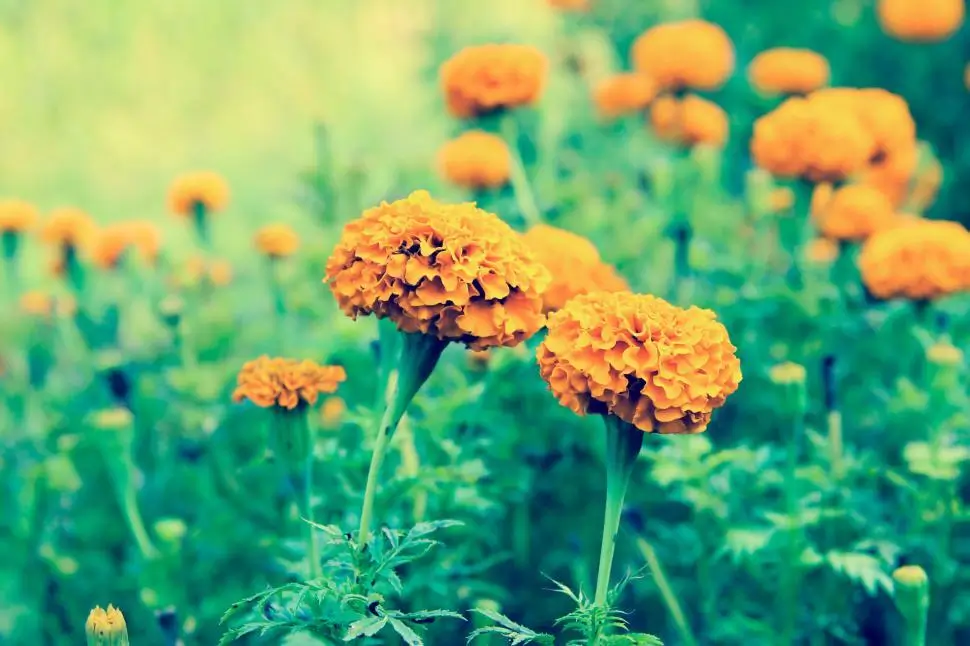
Marigolds are one of the most heat tolerant flowers you can plant. They thrive in full sun, handle poor soil, and bloom from spring through hard frost.
They also serve a practical function near your pool. Marigolds repel mosquitoes naturally. Plant them along the pool edge in Zone 1 or Zone 2 and you create a natural pest barrier while adding color. [Source: Journal of the American Mosquito Control Association]
Tagetes patula, the French Marigold, stays compact at 6 to 12 inches. It works perfectly in Zone 1 where you need low growing color without debris. Deadhead spent blooms to keep them tidy near the water.
Portulaca
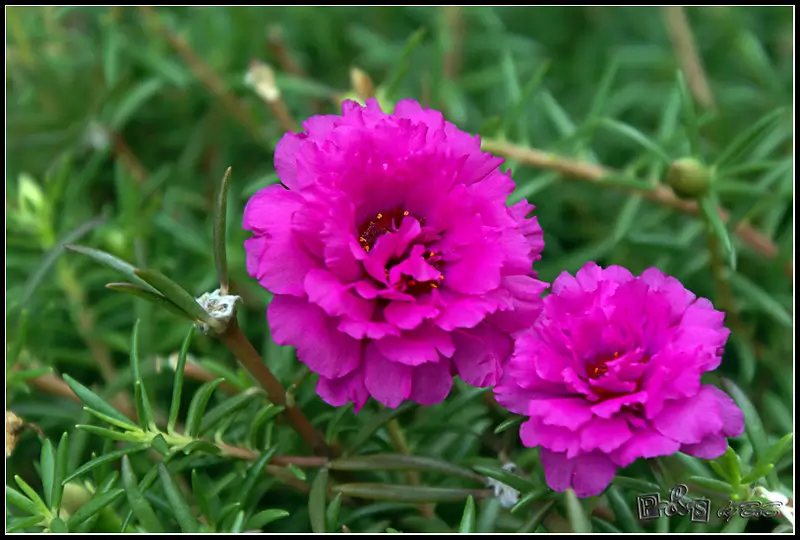
Portulaca grandiflora, also called Moss Rose, is a succulent annual that stores water in its thick leaves. It is one of the most drought tolerant flowering plants available.
It loves the exact conditions that kill other plants. Scorching heat, poor soil, reflected light off concrete. Portulaca thrives in all of it.
It grows 4 to 8 inches tall and spreads to about 12 inches wide. Perfect for Zone 1 where you want color without height. The flowers close at night and on cloudy days, which some people find annoying. If you need all day color, pair it with Lantana in Zone 2.
Best Perennials for Buffalo Pool Landscaping
Perennials are the foundation of a smart pool landscape. You plant them once and they return every year. In Buffalo, that matters. You do not want to replant your entire pool border after every winter.
The perennials in this section are rated for Zone 6 or lower. They handle Buffalo winters and come back stronger each spring. They also tolerate the heat, reflected light, and occasional chemical splash that come with pool environments.
Pair perennials with annuals for a pool border that has both permanent structure and seasonal color. That combination works harder than either plant type alone.
Salvia
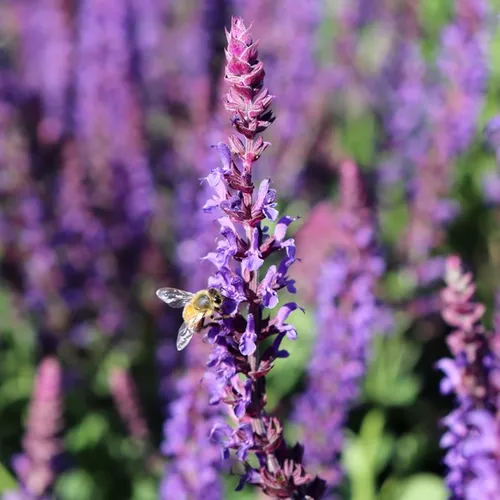
Salvia is one of the most reliable perennials for full sun and heat in Buffalo. It produces tall spikes of blue, purple, or red flowers that attract hummingbirds all season.
Most Salvia varieties are deer resistant. They also rebloom if you cut them back after the first flush of flowers. Salvia nemorosa ‘Caradonna’ and ‘May Night’ are two varieties proven in Zone 4 through 8 climates. Both handle Buffalo winters without protection.
Salvia grows 18 to 36 inches tall. It works in Zone 2 as a mid height border plant. Its vertical flower spikes add structure without visual chaos.
Coneflower (Echinacea)
Coneflower is a North American native. It evolved to handle heat, drought, and cold. Buffalo winters do not faze it.
Echinacea purpurea blooms from July through September. The flowers are large, showy, and attract monarch butterflies and goldfinches. After blooming, the seed heads provide winter food for birds and add visual interest to your pool area in the off season.
Coneflower tolerates lean soil, which makes it ideal for the well drained, nutrient poor soil near pool decks. Plant it in Zone 2 for mid summer color. Rated Zone 3 through 9 by the Missouri Botanical Garden. [Source: Missouri Botanical Garden, missouribotanicalgarden.org]
Black Eyed Susan
Black Eyed Susan (Rudbeckia) is one of the toughest perennials in Western New York. It grows wild along Buffalo roadsides for a reason. It handles clay soil, heat, drought, and cold without any help.
The bright yellow flowers with dark centers bloom from July through October. They create a bold, cheerful border in Zone 2. Leave the seed heads up in fall. Birds eat them through winter.
Rudbeckia fulgida ‘Goldsturm’ is the most reliable variety for Buffalo. It grows 24 inches tall and spreads slowly without becoming invasive. It pairs beautifully with purple Salvia and pink Coneflower for a classic summer color combination. You can read more about how these plants perform in Buffalo specifically in our guide to best plants for Buffalo landscapes.
Sedum (Stonecrop)
Sedum is the perfect perennial for Zone 1 of your pool landscape. It stores water in its thick, fleshy leaves. It handles reflected heat better than almost anything else you can plant.
Low growing varieties like Sedum spurium ‘Dragon’s Blood’ spread slowly and form a tight mat. They produce almost zero litter near your pool. Taller varieties like Sedum ‘Autumn Joy’ work in Zone 2 and bloom in late summer when most perennials are winding down.
Sedum is rated Zone 3 through 9. It requires almost no maintenance once established. No deadheading, no dividing for years, no special soil preparation. It simply grows.
Daylily
Daylilies are practically indestructible in Buffalo. They handle clay soil, drought, heat, and Zone 4 winters without missing a beat.
Hemerocallis reblooming varieties like ‘Stella de Oro’ and ‘Happy Returns’ produce multiple flushes of flowers from June through August. Each flower lasts one day, but the plant produces dozens of buds in sequence. The overall effect is weeks of continuous color.
One practical consideration near pools. Daylily flowers drop cleanly when spent. They do not create a debris problem. The foliage stays tidy until fall. Plant daylilies in Zone 2 for reliable, low maintenance color all summer.
Hardy Hibiscus
Hardy Hibiscus gives you tropical scale blooms in a plant that survives Buffalo winters. The flowers reach 10 to 12 inches across. They stop people in their tracks.
Hibiscus moscheutos varieties like the ‘Summerific’ series are rated Zone 4 through 9. They die back completely to the ground in winter and return in late spring. Do not panic in April when nothing appears. Hardy Hibiscus is always the last perennial to emerge in Buffalo.
Plant it in Zone 3 as a bold background anchor. It grows 3 to 4 feet tall and wide. It creates a tropical resort look without any tropical plant problems like winter kill or invasive roots.
Best Shrubs and Trees for Buffalo Pool Areas
Shrubs and trees give your pool landscape permanent structure. Annuals and perennials provide seasonal color. Shrubs provide the bones that make the whole design hold together year round.
In Buffalo, shrub selection near a pool requires careful thought. You need plants with non-invasive roots, minimal debris, and Zone 6 hardiness. That combination eliminates most large shade trees immediately.
Stick with compact shrubs and small ornamental trees in Zone 3. Keep all large trees at least 15 feet from your pool structure to protect plumbing and the pool liner.
Crape Myrtle
Crape Myrtle (Lagerstroemia indica) produces stunning summer blooms in white, pink, red, and purple. It blooms from July through September when most other shrubs have finished.
Here is the honest take for Buffalo. Standard Crape Myrtles are rated Zone 7 through 9. They will not reliably survive a Buffalo winter in the ground. However, dwarf container varieties work beautifully on Buffalo pool decks. Bring them inside before the first hard frost.
If you want an in-ground option, look for cold hardy varieties like ‘Enduring Summer’ rated to Zone 6. Plant them in the most protected Zone 3 location with winter mulching. [Source: North Carolina State Extension, plants.ces.ncsu.edu]
One caveat. Crape Myrtle drops petals during peak bloom. Keep it planted at least 8 feet from the water’s edge to minimize debris in your pool.
Lavender
Lavender near a pool checks multiple boxes at once. It repels mosquitoes. It smells incredible in the evening. It handles drought and reflected heat. And it produces almost zero debris.
Lavandula angustifolia ‘Hidcote’ and ‘Munstead’ are the two most cold hardy varieties for Buffalo. Both are rated Zone 5 through 8. Plant them in well drained soil on the south facing side of your pool area for best performance.
Lavender hates wet feet. If your Buffalo yard has heavy clay soil near the pool, amend it heavily with gravel and compost before planting. Or grow it in raised beds or containers where you control the drainage.
It grows 18 to 24 inches tall. It works in Zone 2 or Zone 3 as a fragrant, tidy border plant. The purple flower spikes add vertical interest without creating any mess.
Ornamental Grasses
Ornamental grasses are one of the smartest choices for Buffalo pool areas. They produce zero debris near your water. They move beautifully in the breeze off Lake Erie. They require almost no maintenance. And they look good twelve months a year.
Karl Foerster Feather Reed Grass grows 5 to 6 feet tall with upright golden plumes. It is rated Zone 4 through 9 and handles Buffalo winters without any protection. Plant it in Zone 3 for privacy screening that never clogs your pool filter.
Blue Fescue stays compact at 10 to 12 inches. It works in Zone 1 or Zone 2 as a low, tidy accent. Its blue gray color contrasts beautifully against pool water.
Muhly Grass produces pink cloud like plumes in September and October. It extends your pool area’s visual season well into fall. Rated Zone 6 through 9, it sits right at Buffalo’s hardiness limit. Plant it in a protected Zone 3 location.
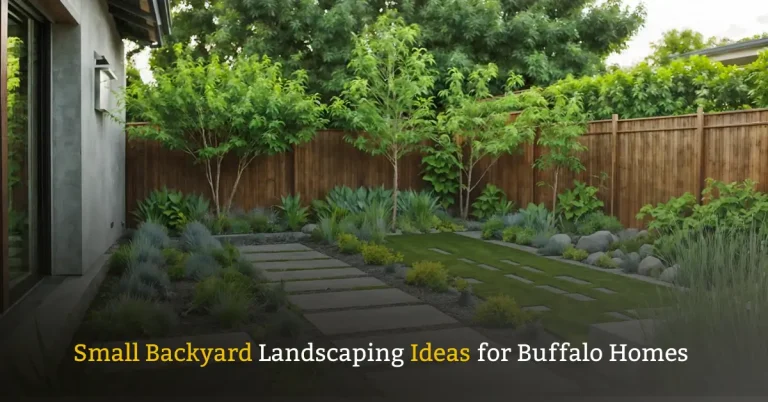
Ornamental grasses also solve the privacy problem without creating a debris nightmare. For more ideas on using plants strategically around compact spaces near your pool, check our small backyard landscaping ideas for Buffalo.
Butterfly Bush
Butterfly Bush (Buddleja davidii) earns its name. Plant one near your pool and monarchs, swallowtails, and hummingbird moths find it within days.
It handles full sun, reflected heat, and drought without complaint. It blooms from July through frost on long arching flower spikes. The flowers are fragrant, which adds to the evening pool experience.
Buddleja is rated Zone 5 through 9. It handles Buffalo winters reliably when planted in a protected Zone 3 location. Cut it back hard in early spring. New growth emerges fast and blooms by July.
One responsible planting note. Butterfly Bush is considered invasive in some states because it self seeds aggressively. Deadhead spent flower spikes before seeds form to prevent unwanted spread in your Buffalo yard.
Best Succulents for Buffalo Pool Landscaping
Succulents near a Buffalo pool require strategic thinking. Most are rated for Zone 9 or warmer. They will not survive a Western New York winter in the ground.
The solution is containers. Grow succulents in large pots on your pool deck. They thrive in the heat. They need almost no water. And you bring them inside before the first frost in October.
A few hardy succulents do survive Buffalo winters in the ground with the right placement and protection.
Agave
Agave is one of the most architectural plants you can put near a pool. Its bold rosette form creates a dramatic focal point. It requires almost zero maintenance.
The challenge in Buffalo is cold hardiness. Most Agave species are rated Zone 8 through 11. Agave parryi and Agave havardiana push down to Zone 5 with excellent drainage and winter protection.
For most Buffalo homeowners, grow Agave in large containers on the pool deck. Move them inside a garage or basement before November. They need minimal water and almost no light during winter dormancy.
One important safety note. Agave has sharp spine tips on every leaf. Never plant it in Zone 1 near the pool edge where barefoot swimmers walk. Keep it in Zone 3 as a background accent or in containers set away from foot traffic paths.
Aloe
Aloe vera and its relatives are among the best container succulents for Buffalo pool decks. They handle full sun and reflected heat from pool concrete beautifully.
Aloe stores water in its thick leaves. You can go a week or more between waterings even in peak Buffalo summer heat. That makes it ideal for busy pool season when watering is easy to forget.
Plant Aloe in well drained potting mix with added perlite. Use terracotta or concrete pots that allow moisture to escape. Plastic pots retain too much heat and moisture near pool decks.
Bring Aloe inside before temperatures drop below 40 degrees Fahrenheit. It overwinters happily in a sunny window and returns to the pool deck the following May.
Sedum as Groundcover
We mentioned Sedum in the perennials section. It deserves a second mention here specifically as a succulent groundcover for Zone 1.
Low growing Sedum varieties are among the only true succulents that survive Buffalo winters in the ground. Sedum spurium and Sedum kamtschaticum are rated Zone 3 through 8. They form tight, spreading mats that cover bare soil between pool deck and garden beds.
They produce zero litter near your pool. They handle the intense reflected heat of pool surrounds. They spread slowly and stay where you plant them. For Zone 1, nothing outperforms hardy Sedum varieties in a Buffalo pool landscape.
Poolside Container Planting for Buffalo Homeowners
Containers are the smartest strategy for Buffalo pool areas. They give you complete control. You control the soil mix, the drainage, the root system, and the plant’s winter fate.
In Buffalo, containers solve the Zone problem entirely. You can grow tropical hibiscus, citrus, Agave, and Bird of Paradise on your pool deck all summer. Then bring them inside before the first frost and put them back out in May.
Containers also protect your pool structure. Plants in pots have zero contact with pool plumbing or the pool liner. No invasive roots, no structural damage, no expensive repairs.
Why Containers Are Smart for Buffalo Pool Areas
Containers give you flexibility that in-ground planting cannot match. You move them when you need space for a party. You rearrange them when something is not working visually. You bring them inside when the weather turns.
For pay per call customers in Buffalo who want a stunning pool area without permanent planting commitments, containers are often the best starting point. They deliver immediate visual impact with zero long term risk.
Container plants also dry out faster than in-ground plants. In Buffalo’s humid summers near a pool, that is often an advantage. Most heat tolerant container plants prefer drying out slightly between waterings rather than sitting in constantly moist soil.
The xeriscaping principles we use for Buffalo landscapes apply directly to container planting near pools. Choose plants that prefer drier conditions and you cut your watering workload dramatically.
Top Container Plants for Full Sun Pool Decks
These plants perform best in large containers (15 gallons or bigger) on Buffalo pool decks:
Tropical Hibiscus (Hibiscus rosa-sinensis) Massive blooms in red, orange, yellow, and pink. Loves full sun and heat. Bring inside before frost. Overwinters well in a bright room above 50 degrees.
Bird of Paradise (Strelitzia reginae) Bold, architectural foliage with exotic orange blooms. Rated Zone 10 through 12, so containers are the only option in Buffalo. Handles pool deck heat extremely well.
Bougainvillea Stunning tropical color in magenta, orange, and white. Thrives in containers and loves reflected heat. One caution: it drops spent bracts regularly. Position containers away from the pool water to minimize debris.
Lantana Already covered in annuals, but Lantana performs equally well in large containers. Heat, drought, nonstop blooms, zero debris in the water.
Citrus Trees Meyer Lemon and Dwarf Lime in large containers add a Mediterranean feel to your pool deck. They handle Buffalo summers in full sun. Bring them inside to a bright, cool room in October.
Container Care Tips for Buffalo Summer Heat
Pool deck containers face extreme conditions. Concrete and pavers amplify heat. Direct sun bakes the pot from the outside. The soil inside can reach 120 degrees Fahrenheit on hot days. [Source: University of Florida IFAS Extension, edis.ifas.ufl.edu]
Follow these practices to keep container plants healthy all season:
Water daily during heat waves. Containers near pool decks dry out faster than anywhere else in your yard. Check soil moisture every morning during July and August.
Use large pots. Bigger containers hold more soil volume and resist temperature swings better than small pots. Minimum 15 gallons for shrubs and tropical specimens.
Add a layer of mulch on top of the container soil. Two inches of organic mulch reduces moisture evaporation and keeps root zone temperatures manageable.
Choose light colored pots. Dark pots absorb heat and cook roots. White, cream, or light gray containers reflect heat and keep soil temperatures lower near a pool deck.
Our Buffalo lawn care team can advise on irrigation options for poolside containers during peak season.
Plants to Avoid Near Your Buffalo Pool
This section saves you money. Every plant on this list looks tempting at the nursery. Every one of them creates serious problems near a pool.
Avoiding the wrong plants is just as important as choosing the right ones. One bad choice can cost you hundreds in pool maintenance, filter repairs, or structural damage to your pool itself.
Buffalo homeowners make these mistakes constantly. Do not be one of them.
High Litter Trees and Shrubs
These plants drop debris constantly. Near a pool, that means constant skimming, clogged filters, and a pool that never looks clean.
Never plant these near a Buffalo pool:
- Silver Maple: Drops seeds, helicopters, and leaves constantly. Roots are aggressively invasive.
- Weeping Willow: Beautiful tree, catastrophic near pools. Roots seek water aggressively and will find your pool plumbing.
- Sweet Gum: The spiky seed balls are a barefoot nightmare and clog filters relentlessly.
- Birch Trees: Constant small leaf drop all season. Catkins in spring create weeks of debris.
- Pine Trees: Needles drop year round. They decompose slowly and acidify pool water chemistry.
- Honeysuckle: Attracts bees aggressively. Creates a pest problem around swimmers.
- Mulberry: Drops messy purple fruit that stains everything it touches, including your pool deck.
Plants With Invasive Root Systems
Roots follow moisture. Your pool is the biggest moisture source in your yard. Aggressive root systems will find it.
Plant any tree with invasive roots within 15 to 20 feet of your pool and you risk cracking the pool liner, damaging underground plumbing, and compromising the pool wall structure. Repairs run into thousands of dollars.
Keep these away from your pool entirely:
- Weeping Willow: Roots travel up to 100 feet seeking water
- Silver Maple: Aggressive surface roots damage pool decks and pavers
- Running Bamboo: Spreads underground with no warning, extremely difficult to remove
- Poplar Trees: Fast growing with aggressive lateral root systems
- American Elm: Large root system causes structural damage to underground features
A practical rule for Buffalo pool owners. Keep any tree over 10 feet tall at least 15 feet from the pool edge. Keep large shade trees 25 feet away. When in doubt, choose shrubs over trees near the water. Our hardscaping team in Buffalo can help you design raised beds and retaining walls that keep root systems contained and away from your pool structure.
Thorny and Spiky Plants Near the Pool
Barefoot swimmers and thorny plants do not mix. This seems obvious but you would be surprised how many Buffalo homeowners plant roses along their pool border.
Never plant these in Zone 1 or Zone 2:
- Roses: Beautiful, but thorns near barefoot traffic cause real injuries
- Barberry: Dense thorns, very aggressive spreader, invasive in New York State
- Hawthorn: Thorns up to 3 inches long, dangerous near children
- Cactus at pool edges: Sharp spines and pool environments are an obvious safety problem
- Agave near the pool edge: Spine tipped leaves cause serious puncture wounds
If you love roses or want cactus in your landscape, plant them in Zone 3 at the far edge of your pool area. Keep them completely clear of the paths swimmers use to reach the water.
Bee Magnet Plants That Cause Problems
Pollinators are wonderful in a garden. They are a problem around a pool full of swimmers.
Some plants attract enormous numbers of bees. Near a pool, that creates a safety risk for anyone with a bee allergy and an annoyance for everyone else.
Use caution with these near your pool:
- Wisteria: Extremely fragrant, attracts massive bee populations during bloom
- Bottlebrush: A bee magnet in warm climates, avoid near pool areas
- Clover in lawn areas: Keep lawn near pool seeded with non-flowering grass varieties
- Borage: Attractive plant but draws bees intensely during its long bloom period
You do not need to eliminate all pollinator plants from your pool area. Lantana, Salvia, and Pentas all attract butterflies and hummingbirds with fewer bee problems than the plants listed above. Make smart substitutions rather than removing color entirely.
Heat Tolerant Pool Plants by USDA Zone
Buffalo sits in Zone 6a to 6b. But this table covers Zones 5 through 11 because many Buffalo homeowners also ask about plants they see while traveling, or want to know what works in containers versus in-ground.
Use this as your quick reference guide when shopping at local nurseries in Amherst, Williamsville, or Hamburg.
Zone 5 to 7 Pool Plants (Buffalo’s Range)
These plants survive in the ground through Buffalo winters. No special protection needed beyond standard mulching.
| Plant | Type | Height | Bloom Time | Notes |
| Coneflower (Echinacea) | Perennial | 24-36 in | July-Sept | Native, zero litter |
| Black Eyed Susan | Perennial | 24 in | July-Oct | Handles clay soil |
| Sedum Autumn Joy | Perennial | 18-24 in | Aug-Oct | Zero debris, groundcover |
| Karl Foerster Grass | Ornamental Grass | 5-6 ft | Aug-Nov | Zero litter, privacy |
| Daylily Stella de Oro | Perennial | 12-18 in | June-Aug | Reblooming, tidy |
| Hardy Hibiscus Summerific | Perennial | 3-4 ft | July-Sept | Tropical look, Zone 4-9 |
| Salvia May Night | Perennial | 18-24 in | May-Sept | Deer resistant, reblooms |
| Panicle Hydrangea Limelight | Shrub | 6-8 ft | July-Sept | Blooms new wood |
| Blue Fescue | Ornamental Grass | 10-12 in | N/A | Zone 1 groundcover |
| Butterfly Bush | Shrub | 4-6 ft | July-Oct | Cut back hard each spring |
Zone 8 to 9 Pool Plants
These work in-ground in warmer climates. In Buffalo, grow them in containers and overwinter indoors.
| Plant | Type | Height | Notes |
| Lantana | Annual/Tender Perennial | 2-4 ft | Grow as annual in Buffalo |
| Crape Myrtle | Shrub/Tree | 3-20 ft | Dwarf varieties in containers |
| Bougainvillea | Vine/Shrub | 3-10 ft | Container only in Buffalo |
| Lavender Hidcote | Shrub | 18-24 in | Zone 5, push to Zone 8 |
| Agave parryi | Succulent | 18-24 in | Container, bring in before frost |
| Tropical Hibiscus | Shrub | 3-6 ft | Container, overwinter indoors |
| Oleander | Shrub | 6-12 ft | Container only, toxic plant |
Zone 10 to 11 Pool Plants
These are true tropicals. Container only in Buffalo. They provide the most dramatic resort style impact on your pool deck.
| Plant | Type | Notes |
| Bird of Paradise | Perennial | Container, overwinter above 50°F |
| Aloe vera | Succulent | Container, bring in before 40°F |
| Citrus Trees | Tree | Container, bright cool overwinter |
| Echeveria | Succulent | Container, bring in before frost |
| Banana Plant | Tropical | Container or dig and store rhizome |
Pool Landscaping Design Tips for a Resort Look
A pool should feel like a destination. Not just a hole in the ground with some bushes around it.
The difference between a pool that looks like a backyard and one that looks like a resort comes down to intentional design choices. Plant placement, layering, and the relationship between plants and hardscape create that elevated look.
Buffalo homeowners often underestimate how much the surrounding landscape affects the pool experience. A well designed pool area adds real property value. According to the National Association of Realtors, landscaping improvements return 100 percent or more of their cost at resale. [Source: National Association of Realtors, nar.realtor]
Layer Your Plants for Visual Impact
Professional landscapers never plant in a single flat row. They layer. Tall plants in the back, medium plants in the middle, low plants at the edge. This creates depth that makes a pool area look designed rather than decorated.
The three zone framework we covered earlier is your layering guide. Zone 1 stays low. Zone 2 adds mid height color. Zone 3 provides tall structure and privacy.
Within each zone, vary heights further. Do not plant everything at the same level. A tall Salvia behind a medium Lantana in front of a low Sedum creates a visual staircase that draws the eye from the pool edge to the background beautifully.
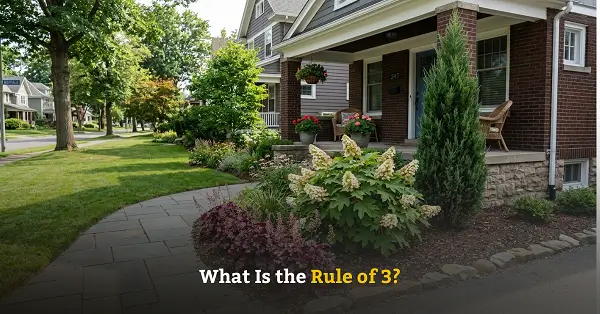
Apply the rule of 3 in landscaping to your plant groupings. Plant in odd numbers. Three Coneflowers together look intentional. Two look accidental. Five look abundant. This single principle transforms amateur looking plantings into professional ones.
Create Privacy Without Mess
Privacy is one of the top reasons Buffalo homeowners landscape around their pools. You do not want to feel exposed while swimming in your own backyard.
The mistake most people make is planting fast growing trees for privacy. Fast growth means aggressive roots. Aggressive roots mean pool damage. Choose shrubs and ornamental grasses instead.
Karl Foerster Grass planted in a row creates a stunning, swaying privacy screen in Zone 3. It reaches 5 to 6 feet with plumes and produces zero debris near your pool. Panicle Hydrangeas add white bloom color to a privacy screen in late summer. Compact Arborvitae ‘Emerald Green’ provides year round evergreen screening rated for Zone 3 through 8.
Combine two or three of these in a staggered row along the back of your pool area. You get privacy, year round interest, and zero filter clogging. If you want a privacy screen that also adds hardscape structure, our hardscaping Buffalo NY team builds pergolas and retaining walls that work with plantings to create complete privacy solutions.
Pair Plants With Your Pool Hardscape
Plants and hardscape work together. They should not fight each other visually.
If your pool deck uses warm toned pavers or natural stone, choose plants with warm colors. Orange Lantana, yellow Black Eyed Susan, and red Hardy Hibiscus complement warm stone beautifully.
If your deck uses cool gray concrete or bluestone, lean toward cooler plant colors. Purple Salvia, blue Lavender, white Panicle Hydrangea, and silvery Blue Fescue grass complement cool toned hardscape naturally.
Raised beds and retaining walls near your pool serve two functions. They create defined planting zones that keep soil out of the pool area. And they elevate plants to eye level, making the pool landscape feel more designed and intentional. Our Buffalo landscape design team integrates hardscape and plant selection from the start so both elements reinforce each other.
How to Care for Poolside Plants Through Buffalo Summers
Choosing the right plants is half the work. Keeping them healthy through a Buffalo summer is the other half.
Pool areas are harder on plants than regular garden beds. The heat is more intense. The soil dries out faster near concrete. Chemical splash affects soil pH over time. And Buffalo summers swing between humid heat waves and periods of drought.
The good news is most of the plants in this guide are low maintenance by design. Follow these practices and they will thrive with minimal effort.
Watering Strategies for Intense Heat
Deep watering beats frequent shallow watering every time. When you water deeply, roots follow moisture downward into cooler soil. Deep roots survive heat waves that kill shallow rooted plants.
Water poolside plants in the morning. Morning watering gives foliage time to dry before evening, which reduces fungal disease risk. It also means water reaches roots before peak afternoon heat evaporates it.
Use the finger test before watering. Push your finger two inches into the soil near the plant’s base. If the soil feels moist, skip watering that day. If it feels dry, water slowly and deeply until moisture reaches 6 to 8 inches down.
Drip irrigation systems work extremely well for pool area plantings. They deliver water directly to the root zone without wetting foliage or splashing soil near the pool deck. Smart timer systems take the guesswork out entirely during peak summer weeks.
Mulching to Protect Roots From Reflected Heat
Mulch is non-negotiable in a Buffalo pool landscape. A 3 inch layer of organic mulch does three things at once. It retains soil moisture. It keeps root zone temperatures manageable. And it suppresses weeds that would otherwise compete with your pool plants for water and nutrients.
Use shredded hardwood mulch or arborist chips. Avoid dyed mulch near pools. The colorants can leach into splash zone soil and affect chemistry over time.
Keep mulch 2 to 3 inches away from plant stems. Mulch piled against stems traps moisture and causes rot. Pull it back from the base of each plant and spread it in a ring extending to the drip line.
Refresh mulch each spring after the seasonal cleaning of your pool area. One application per year maintains adequate depth through the growing season.
Overwintering Your Poolside Plants in Buffalo
Buffalo winters end most poolside plantings abruptly. The key is knowing which plants need action before the first hard frost and which ones take care of themselves.
Perennials: Cut back dead foliage in late October or early November. Leave 3 to 4 inches of stem above ground to mark plant locations. Apply 3 to 4 inches of mulch over the root zone after the first hard freeze. This protects roots from the freeze thaw cycles that push plants out of the ground.
Container tropicals: Bring them inside before temperatures drop below 50 degrees Fahrenheit consistently. October 15th is your target date in most Buffalo suburbs. Clean containers, check for pests, and move them to a garage, basement, or sunny room depending on the plant’s light requirements.
Ornamental grasses: Leave them standing through winter. They provide visual interest in your pool area during the off season and protect the crown from freeze damage. Cut them back to 4 to 6 inches in early March before new growth emerges.
For complete winter plant protection guidance specific to Western New York, our winter lawn care guide for Buffalo covers freeze thaw protection strategies in detail.
Myth vs Fact: What Most People Get Wrong About Pool Plants
This section targets the most common mistakes Buffalo homeowners make when landscaping around their pools. Each myth costs people either money, time, or both.
Myth: Any drought-tolerant plant works near a pool. Fact: Drought tolerance and pool friendliness are different things. A plant can handle dry conditions but still drop heavy debris, attract bee swarms, or have invasive roots that damage pool structures. Check all four pool-specific criteria before choosing any plant.
Myth: You cannot grow tropical plants in Buffalo. Fact: You absolutely can, just not in the ground year round. Container growing makes tropical hibiscus, Bird of Paradise, citrus, and Agave completely achievable in Western New York. Bring them inside before October 15th and they return to your pool deck every summer.
Myth: Native plants look too wild for a pool area. Fact: Native plants like Coneflower, Black Eyed Susan, and Switchgrass look stunning when planted intentionally in a pool landscape. They also require less water, attract more pollinators, and survive Buffalo winters without any help. The key is thoughtful placement, not the plant itself.
Myth: More plants around the pool equals more privacy. Fact: Random planting creates visual chaos, not privacy. Strategic placement of tall ornamental grasses and compact shrubs in Zone 3 creates genuine privacy screening. Planting more plants in Zone 1 and Zone 2 just creates a cluttered look and more pool maintenance.
Myth: Bougainvillea is perfect for pool areas because it loves heat. Fact: Bougainvillea loves heat but it drops spent bracts constantly during bloom. Near a pool, that creates an ongoing debris problem. Grow it in containers positioned away from the water’s edge or skip it entirely in favor of Lantana, which provides similar tropical color with zero debris.
Myth: You only need to plant once and everything takes care of itself. Fact: Even low maintenance pool plants need annual attention. Spring cleanup, mulch refresh, container repotting, and pruning keep your pool landscape looking intentional rather than neglected. Our seasonal cleaning services in Buffalo NY handle all of this so you spend summer swimming, not gardening.
Frequently Asked Questions
What is the best low-maintenance plant for a Buffalo pool area?
Sedum is the single best low maintenance choice for Zone 1 near the pool edge. Karl Foerster Grass wins in Zone 3 for background planting. Both are rated for Zone 4 through 9, require almost no maintenance, and produce zero debris near your pool water. Pair them with Lantana in Zone 2 for continuous color from June through frost.
How far should I plant trees from my pool in Buffalo?
Plant trees with spreading root systems at least 15 to 20 feet from the pool edge. Large shade trees like Maple and Oak should stay 25 feet away. Smaller ornamental trees like Serviceberry can be planted 10 feet away safely. Root damage to pool plumbing and liners is expensive. Distance is the cheapest form of protection.
Are there plants that repel mosquitoes near a Buffalo pool?
Yes. Lavender, Marigold, and Catmint all have natural mosquito repelling properties. Plant Lavender in Zone 2 along the pool border and Marigolds in Zone 1 for a natural pest barrier. These plants also handle full sun and pool area heat without complaint.
Which poolside plants are safe for dogs and children in Buffalo?
Black Eyed Susan, Coneflower, Sedum, Daylily, Zinnia, and ornamental grasses are all non-toxic to dogs and children. Avoid Lantana berries, Oleander, and Butterfly Bush around pets and young children. When in doubt, check the ASPCA toxic plant database before planting anything new near your pool. [Source: ASPCA Animal Poison Control, aspca.org]
Can I use ornamental grasses as a privacy screen around my Buffalo pool?
Absolutely. Karl Foerster Feather Reed Grass planted in a staggered row in Zone 3 reaches 5 to 6 feet and creates effective privacy screening. It handles Zone 4 winters, produces zero pool debris, and sways beautifully in summer breeze. Plant three feet apart for a full privacy screen within two growing seasons.
When should I plant poolside plants in Buffalo?
Wait until after Memorial Day for heat loving annuals and tropicals. Hardy perennials and shrubs can go in the ground as soon as the soil thaws in April. Container plants can move to your pool deck when overnight temperatures stay consistently above 50 degrees Fahrenheit, usually mid to late May in most Buffalo suburbs.
Ready to Transform Your Buffalo Pool Area?
You now have everything you need to make smart plant choices around your pool. You know which plants handle Buffalo’s Zone 6b winters and summer heat. You know which ones protect your pool structure. And you know which ones to avoid entirely.
But knowing what to plant and executing it perfectly are two different things. Pool area landscaping in Buffalo involves soil preparation, drainage management, plant placement, and hardscape integration. Get any one of those wrong and the whole project suffers.
That is where we come in.
We are a local Buffalo landscaping company. We know the difference between what survives in Amherst versus what dies in Orchard Park. We know which plants local nurseries actually stock and which ones you have to special order. And we know how to design a pool area that looks great in July and survives until the following June.
Our Buffalo landscape design team handles everything from initial design through installation. Our hardscaping team integrates pavers, retaining walls, and raised beds that make your pool area look intentional from every angle. And our seasonal cleaning services keep it looking that way all year.
Call us at +1 (716) 349-3625 for a free consultation. Tell us what you want your pool area to look like. We will tell you exactly how to get there.
Buffalo NY Landscaping serves Amherst, Orchard Park, Williamsville, Cheektowaga, Hamburg, West Seneca, Lancaster, Tonawanda, and all of Western New York.