What Is Xeriscaping? Complete Beginner’s Guide for Buffalo Residents
You’re staring at your water bill again. July’s bill hit $120 again. The lawn looks dead even though you’ve watered it constantly. Last Saturday you spent hours moving sprinklers around, and three days later the brown spots came right back.
Sound familiar?
Most Buffalo homeowners assume this is just part of owning a house. Green grass requires constant water, endless mowing, and a summer budget that includes “lawn maintenance” as its own line item. But there’s a different approach that’s gaining traction in Western New York, and it doesn’t involve importing cactus or turning your yard into a gravel pit.
Xeriscaping is landscape design that cuts water use by 50-75% while actually looking better than traditional lawns during Buffalo’s unpredictable summers. It’s not about creating a desert. It’s about working with plants that want to grow here instead of fighting to keep grass alive through August.
This guide breaks down exactly what xeriscaping means for Buffalo properties. You’ll learn what works in our clay soil, which plants handle our winters, what this actually costs, and whether it makes sense for your specific yard. No generic advice pulled from Arizona gardening blogs. Just practical information for homeowners dealing with Erie County weather patterns and Lake Effect everything.
Maybe you’re done throwing money at a lawn that never quite looks right. Or maybe you just want to know if Buffalo homeowners have better options. Either way, this isn’t some trend piece.It’s about making your yard work for you instead of the other way around.
You’re not giving up on your yard. You’re making it work smarter.
What Is Xeriscaping? (Breaking Down the Basics for Buffalo)
Xeriscaping blends “xeros” (Greek for dry) with landscaping. It’s not about creating a desert yard.
It’s design that cuts water use drastically. Instead of forcing grass to survive, you plant things adapted to Buffalo’s climate.
We get 40 inches of rain yearly, but it falls mostly in spring. July and August? Bone dry. Your lawn needs water exactly when rain stops. Traditional landscaping fights this pattern. Xeriscaping works with it.
Why Buffalo homeowners care now: water bills keep rising, summers run hotter and longer, and nobody wants to spend weekends watering grass.
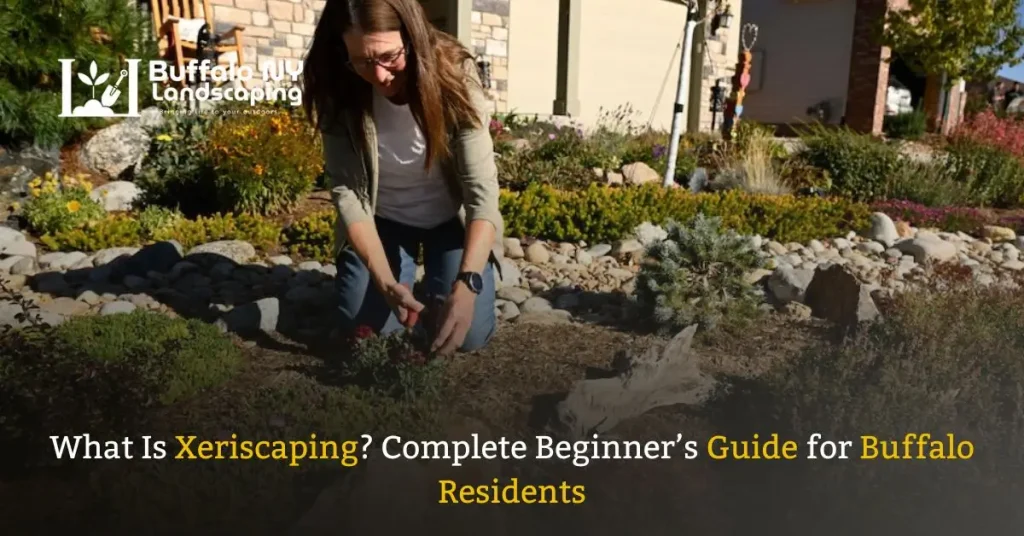
The misconception: Xeriscaping means rocks and cactus. That’s Arizona. Here, you’d use black-eyed Susans, native grasses, and coneflowers – plants made for Western New York winters. Using drought-tolerant plants for Buffalo is one of the most effective ways to create a successful xeriscape design.
Traditional Buffalo yards mean constant mowing, watering, fertilizing. Xeriscaping keeps turf where you actually use it, fills the rest with adapted plants. Less work, better drought performance.
Does Xeriscaping Actually Work in Buffalo’s Climate?
Fair question. Most people hear “water-saving landscaping” and picture Phoenix, not somewhere we shovel snow half the year.
The skepticism makes sense. Buffalo hits below zero in winter. We get Lake Effect snow measured in feet. Spring turns yards into mud pits. How’s a drought strategy supposed to work here?
Here’s the thing: xeriscaping manages water inconsistency, not shortage. Buffalo’s weather is wildly inconsistent.
April through June? Drowning in rain. Then July hits and nothing falls for weeks. Grass browns out despite constant watering. That’s the exact problem xeriscaping solves.
Native plants handle wet springs fine – they evolved here. But they’ve also got deep roots that find moisture when surface soil dries. Regular grass? Shallow roots, constant thirst, dies quickly.
Winter actually isn’t an issue. Ornamental grasses keep structure under snow. Seed heads look good covered in frost. Compare that to a brown dormant lawn from November through April.
Cold-climate xeriscaping works in Minneapolis, Vermont, Michigan – all colder than Buffalo’s Zone 6a. If it functions there, it works here.
Benefits of Xeriscaping for Buffalo Homeowners
Lower Water Bills
Buffalo water rates hit about $4.50 per 1,000 gallons. Doesn’t sound like much until you realize a typical lawn needs roughly 15,000 gallons monthly during summer. That’s $67 just for watering grass, not counting indoor use.
Xeriscaping cuts that by 60-70%. You’re looking at $20-25 instead. Over June through September, that’s $180-200 saved. Year after year, it adds up fast.
Reduced Maintenance Time
Traditional lawn care in Buffalo eats about 4-6 hours weekly during the growing season. Mowing takes 45 minutes to an hour. Watering adds another 2-3 hours if you move sprinklers around. Edging, weeding, fertilizing – it piles up.
Xeriscaped yards? Maybe an hour weekly once established. No mowing in most areas. Watering only during establishment or extreme drought. Occasional weeding and seasonal cleanup. That’s 12-20 hours back in your pocket every month.
Better Drought Resistance
July and August in Buffalo can go two, sometimes three weeks without meaningful rain. Traditional lawns start browning within a week. You’re either watering constantly or accepting a dead-looking yard.
Plants used in xeriscaping have root systems reaching 2-3 feet deep, sometimes more. Surface soil dries out, but moisture exists below. Black-eyed Susans, coneflowers, native grasses – they keep going when shallow-rooted grass quits.
Year-Round Visual Interest
This addresses the biggest Buffalo concern: what happens in winter?
Traditional lawns go dormant brown from November through April. Six months of beige nothing. Xeriscaped yards keep visual elements working. The little bluestem turns copper-orange. Seed heads from coneflowers poke through snow. Evergreen junipers stay green. Ornamental grasses catch frost and look better covered in ice than they do in summer.
You’re not staring at dead grass for half the year.
Increased Property Value
Buffalo real estate agents report mixed results here, but the trend’s shifting. Five years ago, buyers wanted traditional green lawns. Now? Younger buyers especially appreciate low-maintenance landscaping.
Well-designed xeriscaping doesn’t hurt resale and often helps, particularly if you’re selling to buyers from other states where this approach is common. The key is execution – sloppy design with bare spots hurts value. Professional-looking installation with clear borders and healthy plants reads as “upgraded landscaping.”
Environmental Benefits
This isn’t a guilt trip, just facts. Less water used means less strain on municipal systems during peak summer demand. Fewer chemicals running into Lake Erie because you’re not fertilizing constantly. Native plants support local pollinators better than grass monoculture does.
If that matters to you, great. If not, the money and time savings probably do.
The 7 Core Principles of Xeriscaping (Buffalo Edition)
1. Smart Planning & Design
Walk around your yard before doing anything. See where puddles form after rain? Poor drainage. Which areas get sun all afternoon? Those spots bake. Buffalo properties have weird microclimates – the south side of your house stays warmer, north side stays damp longer. Slopes dump water downhill fast. Low spots turn into mini swamps. Don’t fight these patterns. Use them.
2. Buffalo Soil Improvement
Our clay soil here is awful. Drains like concrete when dry, turns to mud when wet. Cornell Cooperative Extension tests soil for around $15-20. Do that first. Then mix compost into the top 6-8 inches – you need 2-3 inches worked in deep. Skipping this kills plants later, even the tough ones.
3. Strategic Turf Reduction
Be honest about lawn use. That patch where kids play? Keep it. The strip along your driveway? Nobody walks there. Most homes here have 2,000-4,000 square feet of grass but actually use maybe 400-600 of it. Everything else just means more mowing. Keep grass where feet actually go. Turn the rest into beds.
4. Water-Wise Plant Selection
Stick with Buffalo natives – they already survived here before anyone started watering them. Black-eyed Susan, coneflower, bee balm work great. Little bluestem and switchgrass for height. Ninebark and serviceberry for bigger shrubs. Buy from Lockwood’s in Hamburg, Mischler’s in Williamsville, or Native Offerings in Orchard Park. They stock what actually grows here.
5. Efficient Irrigation Systems
You’ll probably only water the first year while roots establish. After that, rain does the job except during bad droughts. Soaker hoses work fine – cheap, simple, run them twice weekly for an hour. Drip systems cost more but pinpoint water better. Either way, drain everything by late October or frozen water splits your fittings. Second year onward? Maybe water twice all summer during extreme dry stretches.
6. Mulching for Buffalo Winters
Put down 2-3 inches of shredded hardwood mulch once soil warms in late spring. Around $30 per cubic yard delivered. More than 3 inches suffocates roots. Pull mulch back from stems or you’ll get rot. That same layer handles winter protection – no need for extra. First-year plants might benefit from another inch in late November.
7. Seasonal Maintenance Schedule
Spring means cutting back last year’s dead stuff and adding fresh mulch. Summer is occasional weeding and maybe watering during dry spells. Fall? Plant new things and leave seed heads standing for winter interest. In winter you do nothing. The whole year totals maybe 10-15 hours of work. Traditional lawns eat 80-100 hours minimum between mowing, watering, fertilizing, and everything else.
Best Xeriscape Plants for Buffalo, NY
Native Perennials That Thrive Here
Black-eyed Susans bloom July through September. Once roots go deep, you never water them. Purple coneflowers flower June through August – butterflies swarm these constantly. Bee balm shows up mid-summer in red, pink, or purple and hummingbirds can’t stay away.
All three handle our clay after you’ve worked compost in. Water weekly year one, then forget about them unless we hit extreme drought.
Ornamental Grasses for Buffalo
Little bluestem grows 2-3 feet tall, turns copper-orange come fall, and looks solid covered in snow. Switchgrass hits 4-6 feet, blocks views if you need privacy, drops seeds that birds eat all winter. Prairie dropseed makes 2-foot mounds with super fine texture that frost clings to.
Cut everything back one time in early spring. Done.
Hardy Shrubs and Ground Covers
Ninebark grows fast no matter what soil you’ve got. Bark peels in winter which actually looks cool. Serviceberry blooms white in spring, makes berries you can eat, goes orange-red in fall. Sumac spreads like crazy through underground shoots – perfect for slopes but watch it doesn’t take over.
Creeping thyme smells amazing if you step on it, flowers purple. Sedum hangs low, asks for nothing, blooms late summer.
Plants to Avoid
Anything marked zone 7 or warmer dies here come January. English lavender? Dead. Most ornamental sages? Dead. California poppies? Also dead.
Where to Buy in Buffalo
Hit Lockwood’s in Hamburg, Mischler’s in Williamsville, or Native Offerings in Orchard Park. They carry stuff that survives Western New York and actually know what grows where. Big box stores ship plants from wherever – half that inventory won’t make it through our winters.
Step-by-Step: How to Xeriscape Your Buffalo Yard
Phase 1: Assessment and Planning (Spring)
Grab paper and walk around outside. Draw a rough sketch of your yard. Mark spots where puddles sit after rain. Note which areas get hammered by the sun all day. See where shade hangs out.
Write down problem zones – that awful slope, the side yard where grass won’t grow, anywhere that stays wet and muddy.
Budget reality: small front yard DIY costs $2,000-4,000. Hire somebody and you’re looking at double. Pick whether you’re doing this all at once or breaking it up over a few seasons.
Phase 2: Soil Preparation (Late Spring)
Cornell Extension tests soil for fifteen bucks. Do that first so you know what you’re dealing with.
Dump 2-3 inches of compost everywhere you’re converting. Rent a tiller from Home Depot and churn it down 6-8 inches. Got drainage issues? You might need raised beds or actual drainage pipes buried.
Phase 3: Installation (Early Summer)
Strip out grass using a rented sod cutter or bury it under cardboard for two months. Sod cutter is faster but your back will hate you.
Plant things in groups based on thirst level. Lay soaker hoses through beds before anything else. Then cover everything with 2-3 inches of shredded mulch, just keep it away from plant stems.
Phase 4: Establishment (First Year)
Water twice weekly unless rain shows up. Come August drop to once weekly. By fall quit watering completely unless we’re in an actual drought.
New plants look pretty rough at first – that’s transplant shock talking. They’ll snap out of it. Don’t panic and drown them trying to help. Wet soil 24/7 kills roots faster than drought does. Yank weeds when they’re small before they drop seeds everywhere.
Xeriscaping Costs in Buffalo: What to Actually Expect
DIY Costs Breakdown
Perennials go for $8-15 each, shrubs $20-40. Plan on 3-5 plants per square foot depending how big they get. Mulch is $30 per cubic yard – one yard is about 100 square feet laid 3 inches thick. Soaker hoses cost $15-25 per 50-foot roll. Sod cutter rental hits $80-100 for the day. Compost runs $35-45 per yard.
500 square feet DIY? You’re looking at $1,500-2,500 total. Works out to $3-5 per square foot.
Professional Installation Costs
Landscapers around Buffalo charge $8-15 per square foot. Front yard at 500 square feet means $4,000-7,500 installed. That covers design, digging, plants, fixing soil, hoses, mulch – everything.
Get quotes broken down by materials and labor. Watch for surprise charges like hauling away old sod or permit costs.
Long-Term Savings
Watering grass here costs about $67 monthly come summer. Xeriscape drops that to $20-25, which saves you $180-200 yearly. Lawn service eats $100-150 every month during the growing season. Xeriscaped yard might cost $100 all year just refreshing mulch.
DIY pays itself back in 5-7 years. Hire it done and you’re waiting 8-12 years to break even.
Financing Options
Plenty of Buffalo landscapers let you pay over time. Home equity loans cover this stuff too. Broke right now? Do the front yard this year, back next year. Nobody says you gotta finish everything at once.
| Factor | DIY Xeriscaping | Professional Installation |
|---|---|---|
| Cost per sq ft | $3–5 | $8–15 |
| 500 sq ft total cost | $1,500–2,500 | $4,000–7,500 |
| Plants | Perennials $8–15, shrubs $20–40 | Included |
| Mulch & compost | Mulch $30/yard, compost $35–45/yard | Included |
| Irrigation | Soaker hoses $15–25 (50 ft) | Included |
| Equipment | Sod cutter rental $80–100/day | Included |
| Design & layout | Self-planned | Included |
| Labor | Your time | Professional crew |
| Hidden charges | None if self-managed | Possible sod removal, permits |
| Water cost (summer) | $20–25/month | $20–25/month |
| Annual water savings | $180–200 | $180–200 |
| Maintenance cost | ~$100/year (mulch refresh) | ~$100/year |
| Break-even time | 5–7 years | 8–12 years |
| Best for | Tight budgets, hands-on owners | Convenience, zero hassle |
| Payment flexibility | Pay as you go | Installment plans available |
Xeriscape Maintenance Guide for Buffalo
Spring Maintenance Tasks
Cut back dead stuff once new growth shows in late April. Rake out leftover leaves. Add mulch if it’s under 2 inches. Pull early weeds. Divide perennials that got too big.
Summer Care (Minimal Watering Strategy)
Established plants need water maybe twice all summer during bad dry spells – like three weeks with zero rain. New plants get weekly watering through July, then stop. Pull weeds when you spot them. Deadheading flowers is optional.
Fall Preparation
Leave everything standing – grasses and seed heads look good under snow and feed birds. September through October is actually best for planting new stuff. Roots settle in before freeze. Toss thin mulch layer over anything planted this year comes late November.
Winter Considerations
Nothing. Plants handle Buffalo winters once established. Snow insulates roots from temperature swings. Avoid salt near beds but most xeriscape plants tolerate it better than grass anyway.
Annual Time Investment
Total yearly work after establishment: 10-15 hours. Traditional lawns? 50-80 hours minimum between mowing, watering, fertilizing, and fixing problems.
Xeriscaping vs. Traditional Buffalo Lawns: The Real Comparison
Regular lawns run you $600-900 every year between water, fertilizer, seed, gas for the mower. Hire somebody? Now you’re at $1,200-1,800. Xeriscaped yards cost maybe $100-150 yearly once they’re going – just mulch and replacing a plant here and there. Converting upfront though hits anywhere from $1,500-7,500.
Time? Normal lawn care takes 50-80 hours a year. Mowing alone eats 20-25 hours. Watering grabs another 20-30. Xeriscaping asks for 10-15 hours total – spring cleanup, pulling some weeds in summer, fall stuff.
Water use is wildly different. Traditional grass sucks down 60,000 gallons between June and September here. Xeriscape might use 5,000-8,000 the first year while roots dig in, then basically nothing after.
How’s it look? Regular lawns shine May through June when rain’s dumping. Come July they’re cooked unless you’re watering like crazy. Then November hits and everything goes tan until April. Six months of dead-looking grass. Xeriscaping blooms hardest July-September right when lawns quit. Grasses go orange and copper in fall. Seed heads stick up through snow looking pretty solid. Something to look at year-round.
| Factor | Traditional Buffalo Lawn | Xeriscaped Yard |
| Annual Cost (DIY) | $600–$900 per year | $100–$150 per year |
| Annual Cost (Hired Service) | $1,200–$1,800 per year | Rarely needed |
| Upfront Conversion Cost | None | $1,500–$7,500 (one-time) |
| Annual Time Investment | 50–80 hours | 10–15 hours |
| Mowing Time | 20–25 hours per year | None |
| Watering Time | 20–30 hours per year | Minimal |
| Seasonal Water Use (Jun–Sep) | ~60,000 gallons | 5,000–8,000 gallons (Year 1) |
| Long-Term Water Use | High every year | Near zero after establishment |
| Peak Visual Appeal | May–June | July–September |
| Summer Performance | Burns without heavy watering | Thrives in heat |
| Winter Appearance | Brown, dormant grass | Structure, seed heads, texture |
| Year-Round Visual Interest | ~6 months dull | 12 months of interest |
Potential Drawbacks and Challenges
- Upfront costs sting. Converting 500 square feet runs $1,500-2,500 DIY or $4,000-7,500 professionally.
- Establishment needs patience. First year looks rough – small plants, obvious mulch, gaps everywhere. It takes two seasons before things fill in and look intentional.
- Design mistakes wreck everything. Wrong plants in wrong spots, poor soil prep, skimpy mulch – you’re digging up and restarting instead of just reseeding like grass.
- When it doesn’t work: young kids needing grass play space everywhere, HOA restrictions, selling within two years, you actually enjoy lawn care, or your property floods constantly. Native plants handle dry way better than wet.
Finding the Right Landscaping Professional in Buffalo
Questions to Ask Buffalo Landscapers
Ask if they’ve done xeriscaping specifically. Request photos of projects two years old so you see mature results. Do they source plants locally? What’s their plant survival warranty? How do they fix Buffalo clay soil?
Red Flags to Watch For
Run if they push non-native plants or promise zero maintenance forever. No local references? Pass. Quotes way below competitors mean cut corners on soil prep or cheap plants.
What to Expect in a Consultation
Working with experienced Buffalo landscaping professionals ensures your xeriscaping plan actually survives Western New York winters instead of failing after one season.They should mention soil testing and show plant options for your specific conditions. Expect design mockups before work starts.
Typical Project Timelines
Small front yards take 3-5 days professionally. Bigger jobs run 1-2 weeks. Spring and fall book months ahead. The best installation window is late May through June or September through early October.
Why Local Experience Matters
Buffalo knowledge separates good from mediocre. Lake effect patterns, clay soil fixes, which nurseries stock quality natives, Erie County microclimates – this matters. Five-plus years working here means they know what survives January and what doesn’t.
Getting Started: Your Next Steps
Walk your property this week. Notice where water sits, which spots stay brown all summer, where grass won’t grow. Start there instead of tackling everything at once.
Side yards, slopes you hate mowing, hellstrips between sidewalk and street – these make perfect first projects. Small conversions let you learn without major commitment.
Ready for professional help? Local Buffalo landscapers can assess your property and recommend plants suited to your conditions. Most offer free consultations.
Need someone to talk through your yard situation? We hook up Buffalo homeowners with local pros who actually know low-maintenance landscaping. No pressure, no sales pitch. Just real answers about what’ll work for your property and what it’ll cost you.
Buffalo Xeriscaping Resources
Local Nurseries and Suppliers Lockwood’s Greenhouses in Hamburg stocks native perennials and knows what grows here. Mischler’s in Williamsville carries good plant selection and their staff answers site-specific questions. Native Offerings in Orchard Park specializes in Western New York natives specifically.
Soil Testing Services Cornell Cooperative Extension in Erie County tests soil for fifteen bucks. It takes about two weeks to get results back on pH and what nutrients you’re missing. Their office sits on Bowen Road in Lancaster.
Buffalo-Specific Gardening Groups Buffalo and Erie County Botanical Gardens does workshops on native plants and how to landscape without wrecking your weekends. WNY Permaculture Group meets monthly and shares local growing knowledge. Check Facebook for Buffalo Area Gardeners – active group with tons of local experience.
Native Plant Societies Native Plant Society of New York Western Chapter hosts plant sales twice yearly with species suited to our area. Habitat Gardening in Central New York (they cover WNY too) provides resources on creating native landscapes that handle our climate.