Winter Lawn Care Guide for Buffalo: Prevent Winter Damage
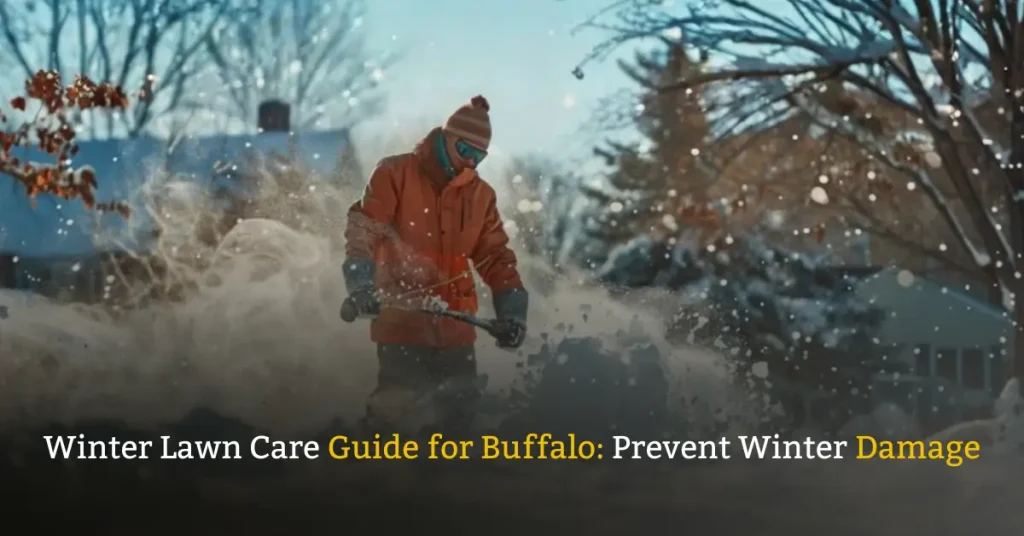
Buffalo winters don’t play nice with lawns. Lake effect snow dumps 95 inches on average each year. Your grass sits buried under heavy, wet snow for months. Then freeze-thaw cycles kick in. Your lawn freezes solid one day, turns to mush the next.
Road salt from constant plowing seeps into your soil. Snow plows scrape edges and compact the ground. By March, most Buffalo lawns look like disaster zones.
Here’s the thing: you can prevent most of this damage. You need to get your lawn ready before October ends. Miss that window, and you’re looking at dead patches and pink fungus come spring.
We’ve maintained lawns across Buffalo for years. We’ve seen what works at 51 Botsford Pl and every neighborhood from Elmwood to North Buffalo. The homes that prep in October have green lawns by May. The ones that don’t? They’re calling us in March asking for help.
Fertilizer timing matters. Snow mold appears under specific conditions. Road salt hits lawn edges the hardest. You need to know when and where to take action. Some jobs are simple enough to do yourself. Others need our lawn care team and proper equipment.
You spent money getting your lawn to look good. Don’t let one Buffalo winter wreck it.
Why Buffalo Lawns Need Different Winter Care (It’s Not Just the Cold)
Buffalo sits right in the lake effect zone. Lake Erie sits right there, pumping moisture into every storm. We don’t get the light powder stuff. Our snow comes down wet and heavy, then parks itself on your lawn until April.
Those lawn care tips you find online? Most come from places like Boston or Denver. Sure, they get cold winters. But they don’t deal with what we deal with. Your lawn spends December through March buried under constant snow. No sun gets through. No air gets in.
Here’s what really kills Buffalo lawns: the temperature swings. It’s 15 degrees on Monday. By Thursday, it hits 45. Your grass can’t handle that. The roots freeze, thaw out, then freeze again. Each swing weakens the plant and opens the door for fungus. Choosing the best plants for Buffalo landscapes can also make your lawn more resilient during harsh winter conditions.
Salt is everywhere in winter. Plows throw it onto your lawn with every pass. Spring comes, and that salt doesn’t vanish. It sits in your soil, burning roots all season long.
We get about 180 days without frost each year. Places like Philly get 220. Your grass has way less time to bounce back before summer heat arrives. One rough winter sets you back for months.
Standard winterizing tips miss all of this. You need a plan for lake-effect snow and nonstop salting.
Fall Prep: Get Your Lawn Ready Before the First Snow (September-November)
September through November decides if your lawn survives winter. Loosen compacted clay soil before freeze-up. Feed grass in October, so roots build strength. Your final mow height matters—2.5 inches prevents cold damage and matting. Fill bare spots now before snow mold spreads. Clear leaves beforethe first snow or face fungus problems.
Aeration: Give Your Soil Room to Breathe
Buffalo soil is mostly clay. Heavy clay. After a summer of foot traffic and mowing, it packs down like concrete. Grass roots need oxygen just like you do. Compacted soil chokes them out.
Aeration pulls small plugs of soil out of your lawn. Air, water, and food can finally reach down where roots live. Your grass can actually grow deeper roots before winter hits.
Hit it in late September or the first week of October. Soil hasn’t hardened yet. Your grass is still growing enough to heal those holes fast.
You can rent an aerator from any equipment shop for about $80 a day. The machines are heavy and awkward to load. Plan on half your Saturday for an average yard. Our professional aeration service brings commercial rigs that dig deeper and move faster. Most lawns take us less than an hour.
Clay soil needs aeration every single year. Skip it, and you’re fighting an uphill battle with every other lawn task you try.
Fertilization Strategy: Feed Now, Thrive in Spring
Winterizer fertilizer is not a regular fertilizer. Look at the three numbers printed on every bag. The third number (potassium) should be the highest. The first number (nitrogen) should be moderate. A 13-0-25 ratio does the job.
Potassium strengthens cell walls in grass plants. Stronger cells handle freeze-thaw cycles better. Nitrogen keeps roots growing even as temperatures drop. You’re not trying to push green growth. You’re building underground strength.
Put it down in late October, right before the first hard freeze. Too early and you waste it on leaf growth that dies anyway. Too late and frozen soil won’t absorb it. Once overnight temps consistently hit 32 degrees, you’re at the window.
Slow-release feeds your grass gradually over two months. Quick-release gives everything at once. Slow-release wins for fall application. Your grass takes what it needs through November as soil temperatures drop.
Most winterizer bags cover 5,000 square feet. Figure out your square footage first. Running short partway through leaves gaps that die out by May.
Final Mowing Height: The 2.5-Inch Sweet Spot
Your last mow of the year is tricky. Cut too short, and cold air hits the crown of your grass plants directly. They freeze and die. Leave it too long, and snow presses it down into a matted mess.
2.5 inches is the magic number for Buffalo lawns going into winter. Measure it. Don’t guess. That height protects the crown while preventing mat formation under heavy snow.
Most people do their final cut in early to mid-November. You’re not looking at the calendar,r though. You’re watching the grass. Growth stops completely. Blades quit getting taller. That’s when you mow. And your blade better be sharp for this last cut.
Dull blades tear grass rather than cutting it cleanly. Those torn ends turn brown and invite disease. If your blade hasn’t been sharpened since spring, do it now or pay someone $10 to sharpen it.
After this cut, winterize your mower. Drain the gas or add stabilizer. One last mow deserves a clean machine.
Overseeding Bare Spots: Fill in the Gaps
Bare spots won’t magically fill in over winter. Snow mold loves attacking thin areas. Those small patches you see in October become big dead zones by April.
Perennial rye comes up quick and takes our cold just fine. Kentucky blue sends out runners underground and thickens up nicely. Mix both, and you’ve got it covered. Stay away from bargain “contractor grade” seed. Cheap seed gives you a cheap lawn.
Fall wins over spring. No contest. Soil temperatures remain warm into October, while the air cools. Grass loves that combo. Weeds don’t germinate in the fall either, so your new grass doesn’t compete for space.
Get seed down by mid-October at the latest. New grass needs three to four weeks to establish roots before a hard freeze. Miss that window and your seed just sits there all winter doing nothing.
Rake bare spots rough before spreading seed. Press it into good contact with the soil. Hit it with water every other day if rain doesn’t come. Sprouts pop up in a week to ten days when temperatures stay decent. If you are looking to reduce water use year-round may also benefit from xeriscaping techniques designed for low-maintenance landscapes.
Leaf Management: Don’t Let Them Smother Your Grass
Light coverage works fine. Heavy leaf piles block the sun and trap water against your grass. Buffalo gets tons of maple and oak leaves. They pile up fast.
Mulching works if you mow over leaves weekly and they’re not too thick. Your mower chops them fine, and they decompose by spring. But once leaves get matted down wet, mulching doesn’t help anymore.
Remove heavy leaf cover completely. Wet leaves stuck to grass create the exact conditions snow mold needs to thrive. You’re basically building a fungus factory on your lawn.
Get your last major leaf cleanup done before the first snow flies. That’s usually late November here. Leaves that fall after that are light enough to mulch with your final mow.
Don’t bag everything if you can avoid it. Chopped leaves add organic matter back to your soil. Just don’t let whole leaves sit there and suffocate your grass all winter. Our seasonal cleaning service handles final fall cleanup for properties across Buffalo.
Protecting Your Lawn During Buffalo’s Winter (December-February)
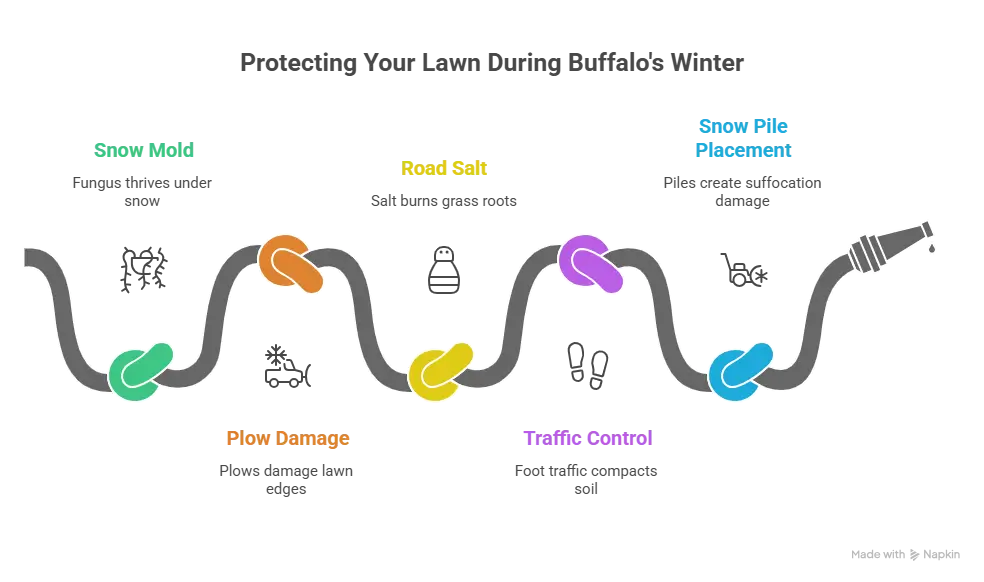
Snow’s here. Now control snow placement, protect edges from plows and salt, avoid foot traffic on frozen grass. Small winter choices prevent spring disasters.
Snow Mold Prevention: Buffalo’s #1 Winter Lawn Enemy
Snow mold is fungus that thrives under snow. Buffalo deals with two kinds: gray and pink. Gray shows up as circular patches of matted, bleached grass. Pink looks similar but has a pinkish tint and damages roots deeper.
Our wet, heavy lake effect snow creates a perfect environment for both types. Snow acts like a blanket keeping ground temps just right for fungus. Water sits against your grass for months with nowhere to go. No air circulation happens under two feet of snow.
You can’t spray anything to prevent snow mold once winter starts. Prevention happens in fall. Mow to the right height in fall. Aerate your soil. Clear those leaves. Less junk on your lawn means less food for fungus to eat.
Stop dumping snow in the same spot every storm. Big piles sit there forever before melting. The longer wet snow sits on grass, the worse snow mold gets. Spread snow around your yard when possible.
Managing Snow Plow Damage Before It Happens
Plow drivers can’t see your lawn edges under snow. They’re focused on clearing driveways fast. Sprinkler heads, landscape lighting, and lawn edges get clipped every winter across Buffalo.
Mark everything before the first snow. Driveway stakes show edges clearly. Flags on sprinkler heads give plow operators something visible to avoid. Even a simple row of stakes along your lawn border helps.
Create a buffer zone between your driveway and good grass. A six-inch strip of mulch or stone along the edge gives plows room for error. They might clip the stone. They won’t rip up turf.
Talk to your plow service before winter starts. Show them where sprinklers are. Point out which areas of lawn you care most about protecting. Good companies will work with you. Our snow removal service marks every property before the season and trains crews to watch for lawn damage.
Take photos after big plow events. Document any ruts or scrapes while they’re fresh.
Road Salt and Ice Melt: The Silent Lawn Killer
Salt doesn’t just melt ice. It burns grass roots from the inside. Salt sucks water right out of grass cells. High salt concentration in soil prevents grass from absorbing water even when plenty is available.
Every plow pass throws salt spray onto lawn edges. It builds up all winter. By March, the first six feet of lawn along your street has toxic salt levels. That’s why those strips stay brown into June while the rest of your yard greens up.
Calcium magnesium acetate costs more than rock salt but won’t kill grass. Sand provides traction without any chemical damage. Use these on your own walkways and driveway. You can’t control what the city spreads, but you control what goes on your property.
Put down a physical barrier where possible. A row of burlap staked along your lawn edge catches some salt spray. It’s not perfect but it helps.
Come early spring, flush salt-damaged areas with water. Run a sprinkler on those edge zones before grass starts growing. You’re trying to push salt deeper into soil away from root zones.
Traffic Control: Stay Off Your Frozen Lawn
Frozen grass blades are brittle. Step on them and they snap. The plant doesn’t recover from broken blades when it’s dormant. You’ve just created dead spots that stay brown until new growth fills in.
Foot traffic on frozen turf also compacts soil. Remember how hard you worked to aerate in fall? Walking across frozen ground packs it right back down. Ice crystals in the soil get crushed. The structure you built gets destroyed.
Lay down pavers or mulch where people actually walk. Driveway to front door. Back door to garage. Make it easy to avoid stepping on frozen grass.
Dogs are the worst offenders. They run the same path every day to their favorite spot. That worn track turns into a mud pit come spring. Fence off sections of lawn if you have to. Redirect traffic to areas that can handle it.
High-traffic zones near doorways take the most abuse. Consider these sacrificial areas. Protect the bulk of your lawn even if edges suffer.
Snow Pile Placement Strategy
Piling all your snow in one spot creates problems. That pile takes forever to melt. The grass underneath sits in cold, wet conditions weeks longer than the rest of your lawn. Suffocation damage and mold thrive under lingering snow piles.
Never pile snow repeatedly in the same location. Rotate dump spots throughout winter. This week’s pile goes in the northeast corner. The next storm’s snow goes along the back fence. Spread the burden across your property.
Avoid south-facing areas for snow piles. They get the most sun but that’s exactly why you shouldn’t use them. South-facing lawn areas melt first naturally. They green up fastest in spring. Don’t waste those prime spots under snow mountains.
Think about drainage when choosing pile locations. Snowmelt needs somewhere to go. Piling snow in low spots creates standing water problems in March. Put piles on slight slopes where melt can run off.
Watch for spring melt patterns. Notice which areas drain well and which turn swampy. Use that knowledge to place next winter’s snow piles smarter.
What NOT to Do to Your Buffalo Lawn in Winter
Some homeowners try too hard with winter lawn care. They rake frozen grass. They throw down leftover summer fertilizer. They dump rock salt everywhere without thinking about where it lands.
You’ll hurt your lawn worse trying to help it. Frozen grass can’t bounce back from damage. It can’t heal itself until spring. Every wrong move you make in January shows up as dead patches in April.
Winter lawn care means not screwing things up. Stay off frozen grass. Move snow piles around. Don’t spread summer products. You’ll want to “help” when you see snow everywhere. Don’t.
Save the active work for fall prep and spring recovery. Winter is the time to leave well enough alone and just avoid making things worse.
Don’t Apply Summer Fertilizer
Summer fertilizers pack high nitrogen content. That nitrogen pushes rapid green growth. Your grass blades shoot up fast and thick. Great for July. Disaster for November.
High nitrogen in late fall or winter forces your grass to grow when it should be going dormant. New tender growth can’t handle freeze-thaw cycles. Those soft blades freeze solid and die. You’ve basically killed your lawn while trying to help it.
Winter fertilizer uses different ratios for a reason. Less nitrogen. More potassium. The potassium strengthens cells without forcing growth. Your grass builds root strength underground instead of wasting energy on blades that will freeze.
Check your fertilizer bag before spreading anything after September. If that first number (nitrogen) is over 15, put it away until spring. Using summer formulas in winter wastes money and damages grass. There’s no upside.
Don’t Rake or Disturb Frozen Grass
Frozen grass blades turn brittle like glass. They snap when touched. Raking frozen turf breaks thousands of blades with every pass. Broken tips stay brown and dead until new growth comes in May.
You’ll spot sticks or leaves out there in January. Leave them. Wait until thaw. A few sticks or leaves sitting on frozen grass won’t hurt anything. Your rake will.
The same goes for walking across frozen lawn to retrieve something or take a shortcut. Every footstep crushes frozen blades and compacts frozen soil. The damage multiplies fast.
If you absolutely must cross frozen grass, step carefully and minimize trips. Better yet, walk around. Those extra steps save you from spring repair work. Don’t touch frozen grass. Wait until temps stay above 32 for good.
Don’t Use Rock Salt Near Lawn Edges
Rock salt costs almost nothing. Cities dump it everywhere. Your lawn pays the price. Ice melts but salt stays behind. It sinks into soil and camps out.
High salt concentration creates dead zones where nothing grows. Not just for one season. For years. Salt-damaged soil takes multiple growing seasons to recover even with treatment.
Your lawn edges take the worst hit. That’s where you shovel. That’s where you spread ice melt. Salt spray from the street lands there too. By spring, you’ve got a six-inch dead strip along every walkway and driveway.
Calcium magnesium acetate works better and won’t kill grass. Sand gives you traction without chemical damage. Both cost more than rock salt. Costs less than fixing dead grass later. Keep ice melt a full foot away from your lawn.
H3: Don’t Ignore Drainage Issues
Water needs somewhere to go when snow melts. If it can’t drain, it pools. Standing water in winter creates ice sheets on your lawn. Ice blocks oxygen from reaching grass roots. Roots suffocate and die.
Poor drainage also extends snow mold problems. Areas that stay wet longer give fungus more time to spread. Your drainage issues become disease issues by default.
Ice dams along roof edges dump huge volumes of melt water in concentrated spots. That water refreezes on your lawn below. You get thick ice layers that don’t melt until March. The grass underneath is dead by then.
Fix drainage problems in fall before ground freezes. Grade away from foundations. Get those gutters and downspouts cleaned out. Run those downspouts away from your grass. Install French drains in chronically wet spots.
Winter exposes every drainage flaw in your property. Take notes now about where water pools and ice forms. Come spring, fix those issues before next winter arrives. Our landscape design team handles drainage corrections across Buffalo properties.
Winter Equipment and Landscape Protection
Winter doesn’t just wreck lawns. Trees, shrubs, sprinkler systems, and hardscaping get hammered by our cold and those constant freeze-thaw swings.
Young trees bend and break under heavy snow and wind. Mature trees shrug it off. Evergreens bleed moisture all winter while their roots sit frozen. Sprinkler pipes explode when water inside turns to ice. Pavers crack from salt exposure and ice expansion.
Protect these investments now or replace them in spring. Most protection work takes an afternoon. Repairs cost hundreds or thousands. The choice is obvious.
Protecting Trees and Shrubs From Winter Stress
Young trees can’t take Buffalo wind like older ones can. Wrap burlap around them. The fabric stops wind from drying them out but still lets them breathe. Stake it down or you’ll find it in your neighbor’s yard after the first big storm.
Evergreens drop moisture through their needles even in January. Ground’s frozen solid so roots can’t pull up replacement water. Grab anti-desiccant spray from any garden center. Coat the needles in late November. That coating locks moisture inside the needles.
Spread mulch around your trees and shrubs. Two to four inches deep. Don’t pile it against trunks. Mulch holds warmth and keeps moisture from escaping. Need help? Our landscape design team protects plants across Buffalo every winter.
Winterizing Irrigation Systems
Blow out your irrigation system before temperatures hit 32 degrees consistently. Water left in lines freezes, expands, and cracks pipes. One burst line costs $500 or more to repair.
Buffalo gets sudden hard freezes in November. Sixty degrees one day, twenty degrees two days later. That quick drop catches people off guard every year. Don’t wait until Thanksgiving week.
Backflow preventers need extra protection. Wrap them in insulation or bring removable ones inside. These brass devices crack easily when water inside freezes. A cracked backflow runs $300 to replace.
Hardscape Winter Prep
Seal pavers and concrete before winter. Sealer prevents water from soaking into tiny cracks. No water inside means nothing to freeze and expand. Sealed surfaces also resist salt damage better.
Salt doesn’t just kill grass. It eats your walkways, patios, and driveway edges too. Constant exposure breaks down stone and concrete. Switch to sand where you can. It gives traction without the chemical damage.
Scrub your hardscaping clean before you seal it. Get all the dirt and junk off. Wait for everything to dry out completely. Wait for a dry day above 50 to put sealer down. Our hardscaping team handles all the sealing and prep work.
Early Spring Recovery: Set Your Lawn Up for Success (March-April)
Snow melts and the damage reveals itself. Dead patches. Salt burn. Compacted ruts. How you handle March and April determines if your lawn thrives or tanks all year. Act now while grass is waking up.
First Inspection After Snow Melt
Walk your entire yard once snow clears. Look for gray or pink circular patches—that’s snow mold. Check lawn edges for brown strips from salt. Notice any ruts or compacted areas from plows or foot traffic.
Take photos of problem spots. You’ll forget where they were once grass starts growing. Document everything now so you know exactly what needs fixing.
Gentle Raking and debris Removal
Rake lightly to lift matted grass. Don’t attack it. Light raking works better than going hard at it. Pull up sticks, dead leaves, and whatever mulch is left and got thick thatch? Hit it with a light dethatching. Wait until the ground firms up, though. Raking mud just makes a bigger mess.
Soil Testing and pH Correction
Buffalo soil runs acidic. Rain and snow wash nutrients out of the soil and tank your pH year after year. Your grass wants pH sitting between 6.0 and 7.0 or it can’t eat right. Pick up a test kit at the garden center or mail samples to Cornell Cooperative Extension.
Results come back in a week. If pH is below 6.0, spread lime in early April. Lime takes months to work so don’t wait until May.
Early Spring Fertilization
Grab balanced starter fertilizer. Look for 10-10-10 on the bag. Don’t worry about dates. Wait until you see green. Once grass starts actively growing, that’s your signal to fertilize. Feeding dormant brown grass wastes product.
Watch for consistent temps above 50 and visible new growth before spreading anything.
Reseeding Damaged Areas
Salt-damaged edges need the most work. Those brown strips along driveways won’t fill in on their own. Plow ruts and gouges also need new seed. Snow mold patches that didn’t recover need attention too.
Rake damaged spots rough. Spread seed thick—thicker than you think. Press it into soil contact. Hit it with water every day for two weeks. Grass pops up in a week to ten days when temps stay decent.
Professional vs. DIY Winter Lawn Care in Buffalo
Some winter tasks are easy enough to handle on your own. Others need commercial equipment and experience you don’t have.
What You Can Handle Yourself
You can handle basic fall work. Mow at the right height. Spread fertilizer. Rake leaves before the snow flies. Watch where the snow gets piled during winter. Rotate where you pile it instead of burying the same spot. Spring comes, and you rake debris, toss seed on thin areas. Takes your time but doesn’t need fancy tools.
When to Call the Pros
Aerators weigh 200 pounds. Renting one costs you $80 for the day. You’ll struggle loading it and spend hours doing what we finish in 45 minutes. Large lawns require commercial overseeders that spread seed evenly and press it into the soil.
Snow mold treatment requires fungicides and precise application rates. Winter property care means coordinating lawn prep, tree protection, and irrigation blowouts all before freeze.
Our lawn care team brings commercial-grade rigs you won’t find at rental shops and years of Buffalo winters under their belts.
Cost-Benefit: Investment in Winter Prep vs. Spring Recovery
Pro fall aeration and fertilization costs $200 to $400 for typical Buffalo yards. Skip it, and spring repairs hit $800 to $1,500. You’re paying for overseeding, fungicide, soil fixes, and multiple fertilizer rounds.
Fixing damage costs triple what preventing it does. Your lawn also stays healthier in the long term when you protect it properly rather than constantly repairing damage every spring.
Buffalo-Specific Winter Lawn Calendar
September: Get your lawn aerated early in the month. Overseed any thin or bare spots while soil temps stay warm. New grass needs 3 to 4 weeks to establish before a freeze.
October: Put down winterizer fertilizer toward the end of the month. Mow whenever the grass grows. Your mower stays out until the blades quit getting taller.
November: Do your final mow at 2.5 inches. Get the last major leaf cleanup done before the first snow. Stake your lawn edges, sprinkler heads, and hardscaping. Plow drivers need to see where not to go.
December through February: Watch where snow gets piled. Rotate dump spots instead of burying the same areas. Stay off frozen grass completely. Check lawn edges after plows come through. Note where the salt spray is landing.
March: Walk your entire yard once the snow melts. Take notes on snow mold spots, salt burn, and plow gouges. Rake lightly to pull up matted grass and grab debris.
April: Fertilize with a balanced starter once the grass greens up and grows. Throw seed on damaged spots. Handle drainage issues you spotted all winter. Check soil pH and spread lime if it’s low.
Common Buffalo Winter Lawn Problems (And How to Fix Them)
Four problems often appear on Buffalo lawns after winter. Here’s how to spot them and what actually fixes them.
Snow Mold Outbreaks
Gray snow mold appears as bleached, circular patches. Pink snow mold has a reddish tint and a musty smell. Both show up afterthe snow melts. Rake affected areas to break up the mat and let air in.
Most cases clear up on their own once temperatures consistently reach 60. Severe outbreaks need fungicide treatment in early spring. Next fall, mow to the proper height and clear all leaves before the snow flies.
Salt Burn Along Edges
Brown strips along driveways and sidewalks that stay dead into June—that’s salt burn. Grass blades look dried out and tan colored. Flush damaged areas with heavy watering in early April. Let a sprinkler run for an hour.
That pushes salt down away from roots. Give it two weeks, then throw down seed. Grass pops up in ten days once the soil hits 50 degrees.
Plow Ruts and Compaction
Deep tire tracks and compressed soil from plows and heavy snow traffic need core aeration. Rent an aerator or call pros in late April. Pull plugs from compacted areas twice—make two passes.
Fill ruts with good topsoil mixed with compost. Smooth it out, spread seed, keep it wet. Grass fills in within three weeks.
Vole Damage and Winter Pests
Surface tunnels that look like raised highways across your lawn—voles did that. They tunnel under snow, eating grass roots all winter. You’ll see the damage in March when the snow melts. Rake tunnels flat.
Reseed the paths they created. Most vole damage repairs itself if you don’t have a major infestation. Keep your lawn mowed short going into winter next year. Voles hate exposed areas.
FAQs: Buffalo Winter Lawn Care
Get Professional Winter Lawn Care in Buffalo
Protect Your Lawn Investment This Winter
Don’t let one Buffalo winter destroy years of lawn work. We’ve protected properties across Western New York for over a decade. We know what lake effect snow does to grass. We know where salt damage hits hardest. We know exactly when to aerate, fertilize, and prep before freeze-up.
Our Winter Lawn Services:
- Fall aeration and overseeding
- Winterizer fertilization (proper timing, proper ratios)
- Complete leaf removal and debris cleanup
- Professional snow removal that protects your lawn edges
- Year-round lawn care programs
- Seasonal property maintenance
We’re located right here at 51 Botsford Pl in Buffalo. We service Elmwood Village, North Buffalo, Kenmore, Tonawanda, Amherst, and all of Erie County. Your neighbors trust us. You should too.
Call us now at +1 (716) 349-3625 or email contact@buffalonylandscaping.com.
Fall prep season is short. Don’t wait until November when it’s too late. Book your fall aeration and winterization package today. Your April lawn will thank you.