Small Backyard Landscaping Ideas for Buffalo Homes: Transform Your Compact Space
Look at your backyard. Maybe 1,500 square feet total, right?
February hits -10°F here. No big deal for Buffalo, but your clay soil? It freezes solid as pavement. Then April shows up with all that snowmelt. Water sits in puddles for weeks. Half your plants drown before May even starts.
If you’re new here, visit our homepage to explore all of our landscaping resources and services, from lawn care to complete outdoor transformations that work in Buffalo’s unique climate.
You need soil fixes, or forget about growing anything decent. What actually survives? Perennials bred for cold. They die back in winter and pop up again every spring without you doing a thing.
Your patio can’t eat up the whole yard. Size it for your actual space, not what you saw on Pinterest.
Want your 1,200-square-foot space to feel bigger? There are tricks. Simple ones. Diagonal lines instead of straight paths. Vertical gardens on fences. Mirrors positioned right.
Good landscaping adds value to your home. That’s nice. But honestly? You just want a backyard you’ll actually sit in come July.
One that doesn’t look like a mud pit every spring.
Buffalo’s Climate & Soil: What You’re Working With
Buffalo weather doesn’t mess around.
Zone 6a Reality Check:
- Winter lows hit -5°F to -10°F every year
- Plants either survive that or they’re gone by March
- No middle ground here
The Snow Problem: We get 95 inches annually. Some winters hit 120. Snow piles four feet high against fences. It crushes plants underneath and snaps branches. Then spring arrives, and it all melts at once.
That’s where the real trouble starts.
Clay Soil Issues:
- Drains more slowly than a clogged sink
- Water puddles for days after storms
- Roots rot in standing water
- Freezes solid, then heaves when it thaws
- Cracks concrete and shifts pavers
Your Growing Season: Late May through early October. Five months total. Last frost around May 15th. First frost hits October 10th. Plant too early? Frost kills it. Wait too long? Roots don’t establish before winter freezes the ground.
Salt Damage: Road crews dump salt all winter. It splashes onto anything near driveways. Burns leaves and poisons the soil. Plants within three feet of pavement need serious salt tolerance, or they’ll look fried by February.
You can’t change Buffalo weather. But you can pick plants and materials that actually work here instead of fighting nature for six months every year.
Zone 6a Requirements
USDA zone 6a sets clear limits. Your plants must survive winters down to -10°F. Anything rated zone 7 or higher dies here. Check tags before buying.
We get 8 feet of snow annually. That’s 96 inches crushing your shrubs and perennials. Cold-hardy species bend under weight and bounce back. Weak ones snap.
Freeze-thaw cycles wreck hardscape. Water seeps into paver joints. It freezes, expands, and cracks everything. Concrete develops fissures. Retaining walls shift. This happens 40-50 times each winter.
Salt spray from roads coats plants near driveways. The leaves are brown and curled. Soil pH changes. Only salt-tolerant varieties survive within 10 feet of pavement.
The growing season runs just five months. But Buffalo is far enough north that June and July give you 15-hour days. Plants grow fast when they’re actually growing. You just need species that wake up late and go dormant early without complaining.
Pick zone 6a or lower. Everything else is a gamble you’ll probably lose.
Clay Soil & Drainage Solutions
Buffalo soil? It’s terrible. Dense clay that won’t drain. Rain sits in puddles for days. Stick a shovel in and you’ll hit clay six inches down that’s thick as peanut butter.
April hits and all that snow melts. Water floods every low spot in your yard. Stands there for weeks. Plant roots rot because there’s nowhere for water to go.
What Actually Works:
Raised beds. Build them maybe 10 inches high. Dump in good topsoil mixed with compost. Your plants sit up above all the soggy clay mess.
Can’t raise everything? Fine. When you plant something, dig the hole way wider than you think you need. Twice as wide, easy. Mix sand and compost into what you took out. That gives roots room to breathe.
French drains sound fancy but they’re just trenches filled with gravel. Run one along your back fence. Line the trench with fabric first so soil doesn’t clog it up. Water moves through gravel fast. No more standing puddles.
Pavers with gaps beat solid concrete every time. Water drips through the spaces. Won’t crack when temperatures drop either.
Fix your drainage situation before you waste money on plants.
Space-Maximizing Design Strategies for Small Buffalo Yards
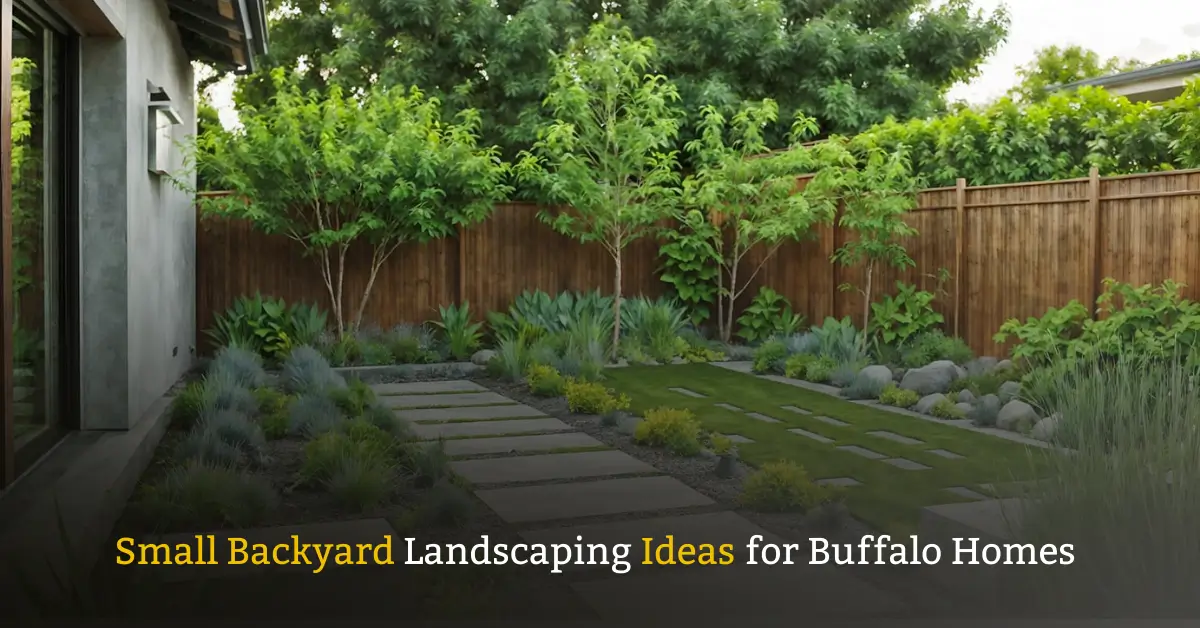
Small yards feel cramped when everything runs straight back from the house. Your eye hits the fence fast. Angle your path diagonally corner to corner. Same 40 feet reads as 55. Free space.
Hang planters on fences. Mount a trellis for clematis. Stack pots three levels high on walls. You just added 60 square feet without losing ground. Break your yard into zones. Patio here. Plants there. Two chairs in the corner. Three separate areas instead of one cramped box.
Use different materials for each zone. Pavers for patios. Gravel for paths. Mulch in beds. Plant short stuff up front and tall plants toward the back. Creates depth your yard doesn’t actually have.
Light colors open spaces. Paint fences light gray instead of dark brown. Plant white flowers near the back. Buffalo yards are small. Make them feel bigger through angles, layers, and smart color choices.
For tailored landscape design solutions that fit your yard’s size and style, check out our professional design services. We can help turn these ideas into reality.
Creating Visual Expansion
Run pathways diagonally instead of straight back. Your narrow backyard instantly looks 30% bigger. Eye follows a longer line.
Curved borders beat straight edges. They hide where your yard ends. Straight lines scream “small yard.” Curves suggest more space around the bend.
Go vertical on fences. Hang planters. Grow vines upward. You maximize space without losing ground area. Mount a mirror on your back fence angled down slightly. Reflects plants and sky. Creates depth that isn’t really there.
Stick with light colors. White, cream, pale gray. Dark tones make limited space feel like a cave. Light opens everything up and adds visual interest.
Your footage is fixed. How big it feels? Totally adjustable.
Multi-Functional Zones
Break your yard into garden rooms. Two or three zones max. Patio for meals. Corner with chairs. Small fire pit spot.
Your brain reads multiple spaces instead of one cramped box.
A 12×20 patio handles everything. Morning coffee. Dinner parties. Weekend entertaining guests. Same outdoor living space, different uses throughout the day.
Get furniture that converts. Benches with storage. Tables that fold. Chairs that stack. Functional zones need to adapt.
Switch things seasonally. Fire pit gets used heavily September through November. Move chairs closer. June hits and you push everything back to open up lawn space.
Multiple sitting areas make small yards work harder. Think zones, not rectangles.
Essential Cold-Hardy Plants for Buffalo Small Yards
Zone 6a limits your choices. Plants survive -10°F or they’re dead.
Hostas handle shade and come back every spring. Tolerate clay soil. Look good May through October.
Daylilies survive anything. Drought, salt spray, terrible dirt. Plant them near driveways.
Astilbe adds texture in shade. Feathery plumes bloom mid-summer. Handles cold perfectly.
Ornamental grasses give year-round structure. Karl Foerster and Little Bluestem stand through winter looking decent even under snow.
Boxwood stays green all year when everything else is brown or buried.
Peegee hydrangeas bloom in late summer. Handle Buffalo winters without protection.
Japanese maples work in tight spots. Compact types stay under 8 feet. Fall color pops.
Cold-hardy perennials cost more upfront but come back for 10-plus years. Annuals die every November, and you start over.
Foundation Perennials
Hostas handle full shade and clay soil. Over 30 varieties work in zone 6a. Plant once, they return for decades.
Daylilies survive hell strips where salt kills everything. Drought-tolerant once established. Bloom all summer with zero care. These hardy perennials actually earn the title.
Astilbe thrives in shade with feathery plumes. Needs moisture but withstand harsh weather. Pink, white, or red all work.
Ornamental grasses like Karl Foerster give year-round structure. Stand through snow. Look decent in February. Cut back once in spring.
Clematis climbs fences for vertical coverage. Jackmanii handles zone 6a cold. Dies to ground level each winter, regrows six feet by July.
All cold-hardy zone 6a plants. Plant in spring, water the first season, then ignore them.
Structure & Year-Round Interest
Boxwood stays green all winter when everything else looks dead. These hardy shrubs handle zone 6a without fuss.
Hydrangeas need peegee varieties here. ‘Limelight’ and ‘Little Lime’ survive Buffalo cold. Bloom late summer when most stuff is done.
Japanese Maple creates a focal point in tight spaces. Compact types stay under 8 feet. Fall color is wild. ‘Bloodgood’ handles our winters.
Weeping Conifers add winter interest when snow buries everything. Give vertical accents and evergreen structure year-round.
Layer these together. Evergreens provide bones. Deciduous stuff adds seasonal color. Boxwood anchors beds in February. Hydrangeas bloom in August. Maples blaze orange in October.
Plant evergreens for structure first. Fill gaps with deciduous for year-round color.
Native & Low-Maintenance Options
Native plants need less water once established. They’re pest-resistant because they evolved here. Black-eyed Susan, wild bergamot, and Joe Pye weed all grow naturally in Western New York.
Xeriscaping means picking drought-tolerant species. Less watering equals low maintenance. Sedum handles dry spells. Native grasses like little bluestem thrive on neglect.
Echinacea (purple coneflower) attracts pollinators and survives Buffalo winters without help. Your yard becomes a wildlife haven for bees and butterflies.
Plant native, water the first year, then let them do their thing. Sustainable and basically free after year one.
Smart Hardscape Choices for Small Buffalo Backyards
Hardscape here needs to handle freeze-thaw cycles. Water gets in cracks, freezes, and expands. Happens 40-plus times each winter.
Solid concrete cracks within three years. Skip it.
Permeable pavers drain through gaps instead of pooling water. They shift when the ground heaves, then settle back. Won’t crack like solid surfaces.
Natural stone on 6 inches of gravel survives our winters. Bluestone and flagstone both work.
A 12×14 patio fits most Buffalo backyards without eating all your space. Bigger leaves planting strips too narrow to use.
Retaining walls solve slopes and create level areas. Stop spring snowmelt from washing soil downhill too.
Build hardscape first. Plants after.
Patio Design Essentials
Minimum size is 10×12 feet. Fits a table and four chairs with room to move. Smaller and you’re bumping elbows.
Materials for Buffalo:
Permeable pavers withstand freeze-thaw cycles and drain through their gaps. Best choice for a backyard patio that lasts.
Bluestone or flagstone on 6 inches of gravel works too. Costs more but looks better.
Skip concrete. Cracks within three winters.
Layout:
Run pavers diagonally instead of straight. Makes your stone patio read bigger in tight sitting areas.
Connect it to your back door with a path. Indoor-outdoor flow matters for outdoor living spaces.
Cost:$15-30 per square foot installed. DIY cuts that in half but eats three weekends.
Retaining Walls: Beauty Meets Function
Buffalo neighborhoods slope. Water runs downhill and takes your topsoil with it every spring. Retaining walls fix this.
They create level entertaining spaces from yards that tilt toward the street. You get usable flat ground instead of a hillside nobody wants to stand on.
Spring snowmelt used to wash soil into gutters. A wall stops that. It’s erosion control that actually works.
Materials:
Block planters stack easily and cost less. Natural stone looks better but runs $40-50 per square foot. Timber works for 2-foot walls but rots in 10 years.
Smart Design:
Add a capstone top that’s wide enough to sit on. Your wall becomes seating. Saves buying extra chairs.
Keep heights between 2-4 feet in small yards. Taller needs engineering permits and looks massive in tight spaces.
Cost:
$25-50 per square foot, depending on materials. A 20-foot wall runs $1,500-3,000 installed.
Pathways & Borders
Stepping stones work for routes you don’t use daily. Space them 18-24 inches apart. Cheaper than full paths, but tough to shovel come January.
Gravel drains itself and costs way less than pavers. Make paths 2-3 feet wide. Pea gravel over fabric works best. Handles freeze-thaw without cracking.
Winter safety:
Smooth stone gets slick when wet or icy. Textured pavers or gravel give traction. You need safe walking surfaces, or someone’s breaking an ankle in December.
Edge your paths with brick, stone, or metal strips. Keeps gravel where it belongs. Makes walking areas look intentional instead of random.
DIY option:
Gravel paths take one weekend. Dig down 3 inches. Lay fabric. Pour gravel. Costs under $200 for a 20-foot path.
Pretty doesn’t matter if your path turns into an ice rink.
Fire Features for Cool Evenings
Fire pits work best at 36-40 inches across in small yards. Big enough for warmth without eating your whole patio.
Buffalo fire codes require 10 feet clearance from structures. Check with the city before building anything permanent.
Fire extends your outdoor season into October and November. September evenings drop to 50°F. A fire pit turns that into comfortable sitting weather.
Portable vs. Built-in:
Portable units cost $200-500 and move wherever you need them. Built-in looks better but runs $2,000-plus.
Creates a gathering spot people actually use instead of staring at their phones. Nothing beats a fire on cool evenings in Buffalo fall.
Overhead Structures That Work in Small Spaces
Pergolas provide shade without walls. An 8×10 pergola fits most Buffalo backyards. Gives 50% shade coverage and supports climbing plants like clematis.
Gazebos need 8×8 feet minimum. Full roof protection but eat more space. Better for corner placement.
Arbors mark entries at 4-6 feet wide. Add vertical interest without blocking views.
Retractable awnings work if you’re renting. Mount to the house. Roll them up before snow hits.
Pergolas for Shade & Style
Build yours at least 8×10 feet. Smaller looks weird and feels cramped.
Slat spacing controls shade. Tight spacing gives 60% coverage. Wider lets more sun through. Throw a canopy over top for full shade in August.
Grow clematis or grape vines up the posts. Living shade that actually smells decent.
Cedar lasts 15-20 years in Buffalo weather. Composite costs double but you never stain or seal it.
A pergola marks off space without blocking wind. Creates an outdoor room people actually sit in.
DIY kits cost $2,000-5,000. Hire someone and you’re looking at $4,000-8,000.
Gazebos & Alternatives
Gazebos need 8×8 feet minimum for a table and chairs. Full roof keeps rain off. Works year-round if you add screens.
Arbors define garden entry points at 4-6 feet wide. Add vertical interest without eating floor space. Clematis grows up them fast.
Canopies cost less. Retractable awnings mount to your house and roll up before winter. Shade sails run $100-300 and take 20 minutes to hang.
Stick gazebos in corners. Keeps your center open for other stuff.
Buffalo wind hits hard. Anchor everything deep or March storms rip it out. Eight-inch concrete footings minimum for permanent structures.
Privacy Solutions for Tight Buffalo Lots
Arborvitae puts on 3-5 feet every year. Space them 3 feet apart. Two seasons and you can’t see your neighbor’s yard anymore.
Switchgrass gets huge by July. Six to eight feet easy. Joe Pye weed does the same without looking formal.
Buffalo lets you build 6-foot fences. Add lattice strips on top for another foot and a half.
Fast-Growing Privacy Plants
Arborvitae ‘Green Giant’ puts on 3-5 feet per year here. Space them 3-4 feet apart. Two summers and your neighbor can’t see into your yard anymore.
Switchgrass shoots up to 6-8 feet by July. Joe Pye Weed hits the same height with purple flowers that actually smell good.
Stack your plants in layers. Tall stuff against the fence. Medium height in front of that. Low groundcover fills the bottom gaps. Blocks views at every level.
Evergreens don’t drop leaves in November like everything else. Arborvitae stays thick all winter for year-round privacy.
Plant screening stuff 3-4 feet apart max. Closer spacing fills gaps faster.
Fence & Structural Privacy
Buffalo codes let you go 6 feet high in backyards. Check with your neighborhood association first. Some cap it at 5 feet.
Lattice panels on top add another 12-18 inches without looking like a prison wall. Plus they give you something to hang plants on.
Mount planters directly on existing fences. Grow herbs, flowers, whatever. Turns boring wood into a vertical garden that blocks views.
Big metal planters work as movable screens. Stack them 3-4 feet tall. Roll them wherever you need privacy that week. Way more flexible than permanent fencing.
Basic privacy fencing runs $20-40 per linear foot installed. That’s $800-1,600 for a typical 40-foot property line. Cedar costs more but lasts longer than pine.
Vinyl needs zero maintenance but looks cheap. Your call on that trade-off.
Outdoor Lighting for Function & Ambiance
Light your paths or someone’s face-planting on ice. Buffalo gets dark at 4:30 PM in winter. You can’t see squat without lights.
| Lighting Type | What It Does | Where It Goes | Cost |
| Path lights | Keep you from tripping | Steps, walkways, doors | $150-400 |
| String lights | Makes things cozy | Patios, pergolas, fences | $50-200 |
| Uplights | Drama and shadows | Trees, walls, big plants | $100-300 |
| Spots | Light up dark corners | Sketchy areas, focal points | $75-250 |
Solar vs. Wired:
Solar dies here. December sun is weak and only lasts 8 hours. Batteries stay half-charged. Go with low-voltage wired if you want lights that actually work in February.
Where to Put Them:
Every corner, step, and gate needs light. Mix path lights with string lights and uplights. Layering makes your yard usable after dark.
Full setup runs $500-2,000 for small yards. Get timers so they click on automatically at sunset.
Budget Planning for Small Buffalo Backyard Transformations
| Budget Range | What You Get | Timeline | DIY vs Pro |
| $2,000-$5,000 | 10×12 paver patio, perennials, gravel path | 3 weekends | Mostly you |
| $5,000-$10,000 | 12×16 patio, retaining wall or pergola, full plantings, path lights | 2 months | Mix both |
| $10,000+ | Custom hardscape, fire pit, pergola, irrigation, and complete lighting | 3 months | All pro |
$2,000-$5,000: Basic patio with pavers. Grab some perennials. Lay a gravel path. You handle most of it over three weekends.
$5,000-$10,000: Bigger patio. Toss in a retaining wall or pergola. Buy enough plants to actually fill space. Add path lights. Hire muscle for heavy lifting. Two months total.
$10,000+: Pro does everything. Irrigation runs underground. Full lighting package. Fire pit and pergola both. Three months of crews in your yard.
Split It Up: Year one: Patio and paths. Year two: Plants and pergola. Year three: Lights and extras. Easier on your wallet.
Most Buffalo yards hit $6,000-$8,000 for solid results.
Phased Implementation
Year 1: Hardscape Foundation: Build your patio and paths first. Get the bones right. Pavers, gravel, and retaining walls, if needed. This is your base layer.
Year 2: Plantings and Structures: Add perennials, shrubs, and trees once hardscape settles. Build your pergola or raised beds. Plants need established ground underneath anyway.
Year 3: Finishing Touches: Install lighting now that you know where you actually sit at night. Add water features or art pieces. These extras make sense once you’ve used the space.
Why Phase It: Spreads cost over three years instead of one giant hit. Lets you see what works before committing to everything. Your timeline stays flexible if the budget gets tight.
Most people blow their whole budget on hardscape, then can’t afford plants. Phased approach fixes that.
Month-by-Month Buffalo Landscaping Calendar
April: Rake up dead stuff. Ground’s too frozen to plant anything yet.
May: Frost stops around the 15th. Safe to stick plants in ground after that.
June-August: Water your new stuff once a week. Things grow fast now. Hit Garden Walk in July for free ideas.
September: Best time to plant perennials. Roots dig in before everything freezes solid.
October: Frost comes back around the 10th. Shut off your irrigation. Throw cushions in the garage.
November-March: Sketch plans for spring. Knock snow off bushes before branches break.
You get May through September to actually plant. Rest of the year is cleaning up or daydreaming.
Common Mistakes to Avoid in Small Buffalo Backyards
1. Oversized Features: Building a 14×20 patio in a 600-square-foot yard? Now you’ve got no room for plants. Cap hardscape at 40% of your total space.
2. Ignoring Drainage: Clay soil plus melting snow equals standing water everywhere. Dig French drains before you do anything else or you’re living in a swamp come April.
3. Wrong Plant Zones: Bought zone 7 plants? They’re dead by February. Tags say zone 6a or lower for Buffalo. Don’t waste cash on stuff that can’t hack winter here.
4. All Grass Mentality: You’re mowing maybe 200 square feet of grass strips? Rip them out. Plant beds take way less time and look better year-round.
5. Neglecting Winter Interest: Pick all deciduous plants and your yard looks like a graveyard November through April. Throw in boxwood or arborvitae so something stays green.
6. Poor Lighting Placement: Dark paths mean someone’s busting their face on ice. Light up every step and corner. Your insurance agent will thank you.
7. Skipping Permits: Buffalo makes you pull permits for anything over 120 square feet. Your deck needs one. So does that pergola. Check before building or city makes you tear it down.
8. Wrong Paving Materials: Concrete cracks here within three years. Freeze-thaw beats it up nonstop. Go with permeable pavers that move with the ground instead of fighting it.
FAQ: Small Backyard Landscaping in Buffalo
Conclusion: Start Your Buffalo Backyard Transformation
Your small Buffalo backyard works fine. You just need the right plants and decent drainage.
Measure your space. Pick a budget. Start with one thing—patio or plants, not both.
Plan for clay soil and -10°F winters. Zone 6a plants only. Fix drainage before anything else or you’re wasting money.
Split big projects across years. Hardscape first. Plants second. Lights last. Easier on your wallet.
Hit Garden Walk Buffalo in July. Four hundred yards open free. Steal ideas from neighbors who already figured this out.